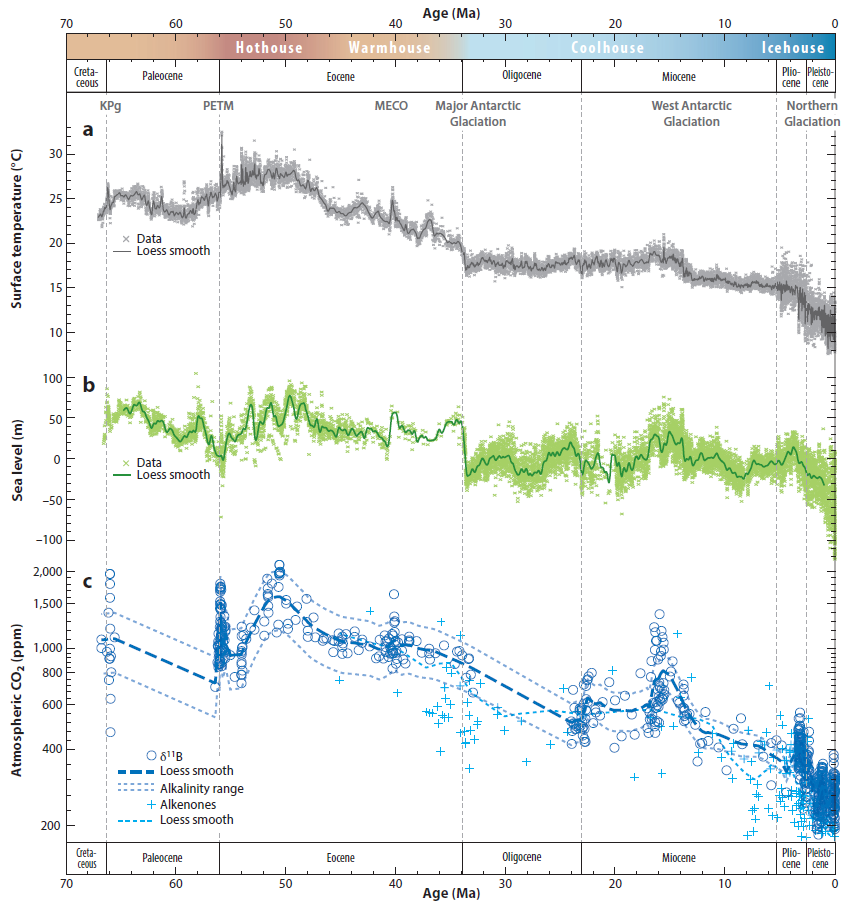
https://www.nature.com/articles/d41586-021-02951-3
This is a very important topic generally.
But it has much relevance to human
evolution, especially over the last 2.5 Myr
Hominins were responsible for the
massive destruction of the terrestrial
ecology, especially in Africa, when their
activities brought about the ice-ages.
One side-effect, resulting from the
widespread desertification, were massive
dust storms that greatly increased the
amount of iron blown into the oceans.
This must have lead to greatly increased
density of plankton and teeming seas of
fish. The seas would have kept
atmospheric carbon dioxide to a
minimum.
For hominins, life on the continental
uplands would have been close to
impossible. Fishing in the fecund seas
became much easier.
The removal of most large whales from
the oceans, especially in the 19th
century, must have been a significant
factor in the problems we now face with
excess CO2.
From:
https://www.nationalgeographic.com/animals/article/whales-eat-three-times-more-than-thought
"Humpback (Megaptera novaeangliae) and other baleen
whales excrete huge amounts of iron-rich feces that are vital
to the flow of the ocean’s nutrient cycle.
“This study shows that baleen whales play a much more
important role in our ecosystem than we thought,” says
Sian Henley, a marine scientist at the University of
Edinburgh, who was not involved in the study. That’s
because the 14 known baleen whale species are crucial to
moving vital nutrients such as carbon, nitrogen, and iron
through the ocean, primarily via their excrement.
The new information, Henley says, also “tells us that we
need to improve ocean protection and management at the
largest scale possible, especially in the Southern Ocean.”
The waters off Antarctica are particularly vulnerable to
human impacts, largely because of warming temperatures
from climate change and overfishing that disrupt the
normal circulation of nutrients, which could also harm krill
and other food sources of baleen whales. This would be
especially damaging, as these whales are still recovering
from centuries of whaling.
As whales continue to rebound, their role in recycling
nutrients should reset the nutrient cycle—and boost
krill—once again, he says.
To estimate how much baleen whales eat, scientists
previously analyzed their metabolic needs based on their
size and activity level using a closely related or similarly
sized animal as reference. For instance, by measuring how
much orcas (or killer whales) eat, biologists extrapolated
what a humpback whale or a blue whale would consume.
“When you get down to the behavior, ecology, and
physiology of these animals,” Savoca says, “a blue whale
and a humpback are very, very different from a killer
whale.” He allows that the earlier attempt is “better than
nothing, but it’s not actually a very good guess at all.”
--- SoupGate-Win32 v1.05
* Origin: fsxNet Usenet Gateway (21:1/5)