Interestingly, a study in the Journal of Human Evolution showed that although the young
man was certainly carnivorous, there was no evidence of any seafood in his diet.
DD'eDeN aka note/nickname/alas_my_loves wrote:
Interestingly, a study in the Journal of Human Evolution showed that although the youngWow, and with a sample of one, no less. That is truly amazing.
man was certainly carnivorous, there was no evidence of any seafood in his diet.
And of course it never occurred to you that they're saying something as porous
as bone had soaked in marine isotopes for tens of thousands of years, and yet their test was unable to find any. While we're at it...
I won't try to explain to you the concept of the Straw Man Argument, as this has
proved fruitless in the past, so maybe you could instead quote someone -- ANYONE -- who both supports Aquatic Ape *and* insists that absolutely
every last member of the genus Homo had to sustained themselves on an aquatic diet, or Homo never spread across the globe.
It would be interesting. That is, seeing if your failure would expose your error to
you. That would be interesting. Doubtful, but interesting.
You're trying to "Win" and "Be clever," instead of discussing a topic of interest. This
is why you keep losing and look like such an idiot.
Stop trying.
-- --
https://jtem.tumblr.com/post/686063009321336832
Interestingly, a study in the Journal of Human Evolution showed that although the young man was certainly carnivorous, there was no evidence of any seafood in his diet. This was taken from an analysis of the isotopes, or elements, including of carbonand nitrogen, found in his skull.
https://greekreporter.com/2022/06/03/neanderthal-mans-recreated-face-takes-internet-by-storm/
Interestingly, a study in the Journal of Human Evolution showed that although the young man was certainly carnivorous, there was no evidence of any seafood in his diet.
This was taken from an analysis of the isotopes, or elements, including of carbon and nitrogen, found in his skull.
https://greekreporter.com/2022/06/03/neanderthal-mans-recreated-face-takes-internet-by-storm/
Op zaterdag 4 juni 2022 om 03:59:52 UTC+2 schreef DD'eDeN aka note/nickname/alas_my_loves:
Interestingly, a study in the Journal of Human Evolution showed that although the young man was
certainly carnivorous, there was no evidence of any seafood in his diet. This was taken from an analysis
of the isotopes, or elements, including of carbon and nitrogen, found in his skull.
https://greekreporter.com/2022/06/03/neanderthal-mans-recreated-face-takes-internet-by-storm/
Why not inform a *little* bit before talking nonsense??
30 kDa) and -20.2 permille (10�30 kDa) indicate that there was nosignificant (i.e., none, or less than 10%) consumption of marine
Interestingly, a study in the Journal of Human Evolution showed that although the young man was
certainly carnivorous, there was no evidence of any seafood in his diet. This was taken from an analysis
of the isotopes, or elements, including of carbon and nitrogen, found in his skull.
https://greekreporter.com/2022/06/03/neanderthal-mans-recreated-face-takes-internet-by-storm/
On Fri, 3 Jun 2022 18:59:51 -0700 (PDT), "DD'eDeN aka note/nickname/alas_my_loves" <[email protected]> wrote:
Interestingly, a study in the Journal of Human Evolution showed that although the young man was
certainly carnivorous, there was no evidence of any seafood in his diet. This was taken from an analysis
of the isotopes, or elements, including of carbon and nitrogen, found in his skull.
https://greekreporter.com/2022/06/03/neanderthal-mans-recreated-face-takes-internet-by-storm/Obviously the reconstruction of the face could not be based on the
Zeeland Ridges specimen itself since it only preserves a fragment of
the frontal bone: https://www.universiteitleiden.nl/en/news/2009/07/a-neandertal-fossil-from-the-north-sea
Now, do they reallly think the Turkana Boy had that much hair on his
head?
https://www.kenniskennis.com/turkana-boy/
How could that be adaptive?
Op zaterdag 4 juni 2022 om 03:59:52 UTC+2 schreef DD'eDeN aka note/nickname/alas_my_loves:Compared to whom?
Interestingly, a study in the Journal of Human Evolution showed that although the young man was certainly carnivorous, there was no evidence of any seafood in his diet.I didn't know you were so stupid, DD?!
C & N isotopes were *super*carnivorous:Like dolphins, whales and sea otters.
are you really so stupid to believe you can be more carnivorous than felids??Non sequitur.
C & N isotopes simply show marine or aquatic foods, probably mostly shellfish.Delusions abound.
Delusions abound. "no evidence of any seafood in his diet"This was taken from an analysis of the isotopes, or elements, including of carbon and nitrogen, found in his skull.Yes, this one of numerous indications that neandertals often dived for food.
https://greekreporter.com/2022/06/03/neanderthal-mans-recreated-face-takes-internet-by-storm/
Only incredible imbeciles believe their ancestors ran after kudus. :-DDDKudu = fish trap.
Now, do they reallly think the Turkana Boy had that much hair on his
head?
https://www.kenniskennis.com/turkana-boy/
How could that be adaptive?
On Saturday 4 June 2022 at 12:25:41 UTC+1, Pandora wrote:
Now, do they reallly think the Turkana Boy had that much hair on his
head?
https://www.kenniskennis.com/turkana-boy/
They (fairly reasonably) assumed that
earlier hominins were similar to the
later ones that occupied Central and
Southern Africa. Google "afro hair
tribesmen" or see:
https://en.wikipedia.org/wiki/Melanesians
How could that be adaptive?
If it was adaptive later, why not earlier?
"Adaptive to what?" is the question.
I suggest that humans (and later
hominins) had large heads because
they had large brains, and they had
large brains as a reserve source of
heat for those occasions when they
had to swim in cold ice-age seas.
Their heads would be out of the
water, and this enormously thick hair
was to help preserve that heat --
enabling the best to reach shore and
survive. Even if the swimming event
(or 'shipwreck') was less than once in
a lifetime, it would still be powerfully
selective.
On Sat, 4 Jun 2022 02:16:52 -0700 (PDT), "[email protected]" <[email protected]> wrote:
Op zaterdag 4 juni 2022 om 03:59:52 UTC+2 schreef DD'eDeN aka note/nickname/alas_my_loves:
Interestingly, a study in the Journal of Human Evolution showed that although the young man was
certainly carnivorous, there was no evidence of any seafood in his diet. This was taken from an analysis
of the isotopes, or elements, including of carbon and nitrogen, found in his skull.
https://greekreporter.com/2022/06/03/neanderthal-mans-recreated-face-takes-internet-by-storm/
Why not inform a *little* bit before talking nonsense??
From the paper:
"Carbon and nitrogen isotope analysis is a well-established
method for reconstructing the protein portion of past human diets, especially in terms of the amount of marine vs. terrestrial protein,
and the amount of animal vs. plant protein (see the recent review
by Lee-Thorp, 2008). The carbon isotope values of -20.6 permille
30 kDa) and -20.2 permille (10–30 kDa) indicate:
that there was no
significant (i.e., none, or less than 10%) consumption of marine
protein by this Neandertal.
This is confirmed by the nitrogen
isotope values of 10.1 permille (>30 kDa) and 10.2 permille (10–30
kDa), which also do not indicate a significant marine protein input.
This finding is in line with all previously published studies of Neandertals, in which in each case there is also no evidence for any significant and regular consumption of marine protein (e.g., Richards
et al., 2000, 2008; Bocherens et al., 2001,2005; Richards and Schmitz, 2008). In order to accurately interpret the d15N value (to determine
the relative amounts of animal vs. plant proteins in their diet)
requires comparative faunal isotope values. However, these are
impossible to obtain with a specimen like this recovered from marine sediments. A comparison with other Neandertals from Europe shows
that this Neandertal has very similar d15N values, and in all of the
published isotopic studies of Neandertals (where comparison with
associated fauna was possible), the authors have concluded that
Neandertals were top-level carnivores (e.g., Richards et al.,
2000,2008; Bocherens et al., 2001,2005; Richards and Schmitz,
2008). Without comparative faunal evidence we cannot yet determine
if that is the case with the Zeeland Ridges Neandertal, but as
the d15N value is very similar to many of the other Neandertals, we
can suggest that this Neandertal followed the same dietary pattern." https://www.sciencedirect.com/science/article/abs/pii/S0047248409001560
. .They (fairly reasonably) assumed that. .
earlier hominins were similar to the
later ones that occupied Central and
Southern Africa. Google "afro hair
tribesmen" or see:
https://en.wikipedia.org/wiki/Melanesians
The physique of the Turkana Boy has been likened to that of Nilotic
people: https://en.wikipedia.org/wiki/Nilotic_peoples
How could that be adaptive?. .
If it was adaptive later, why not earlier?
"Adaptive to what?" is the question.
Humans are not cetaceans, and if anything they have a problem
dissipating heat in tropical environments.
That explains the sweating,
the long distal limb segments, the strong vascularization of the scalp
and emissary veins of the skull, etc.
On Saturday 4 June 2022 at 16:59:11 UTC+1, Pandora wrote:
. .They (fairly reasonably) assumed that. .
earlier hominins were similar to the
later ones that occupied Central and
Southern Africa. Google "afro hair
tribesmen" or see:
https://en.wikipedia.org/wiki/Melanesians
The physique of the Turkana Boy has been likened to that of Nilotic
people: https://en.wikipedia.org/wiki/Nilotic_peoples
The current fashion in East Africa appears
to be to keep the hair short. That may be
for comfort, or could be to emphasise
differences from Bantu etc. Take a look
at photos from the colonial era. Search
for images of "fuzzy-wuzzy sudan". You'll
see a lot of Nilotic people with "Afro hair"
How could that be adaptive?. .
If it was adaptive later, why not earlier?
"Adaptive to what?" is the question.
What is your answer?
Humans are not cetaceans, and if anything they have a problem
dissipating heat in tropical environments.
It's common to have two or more competing
pressures. Many would have died from heat
exhaustion, and so selecting for naked bodies
and sweating.
That explains the sweating,
Sweating needs replacements of salts of
sodium, iodine, potassium, etc.
the long distal limb segments, the strong vascularization of the scalp
and emissary veins of the skull, etc.
Vascularisation might be better explained
by the need to keep all that hair growing.
On Sat, 4 Jun 2022 13:17:39 -0700 (PDT), Paul Crowley
<[email protected]> wrote:
On Saturday 4 June 2022 at 16:59:11 UTC+1, Pandora wrote:
Some of the oldest images are engravings from the 19th century: https://pixels.com/featured/nuer-chief-collection-abecasisscience-photo-library.html. .They (fairly reasonably) assumed that. .
earlier hominins were similar to the
later ones that occupied Central and
Southern Africa. Google "afro hair
tribesmen" or see:
https://en.wikipedia.org/wiki/Melanesians
The physique of the Turkana Boy has been likened to that of Nilotic
people: https://en.wikipedia.org/wiki/Nilotic_peoples
The current fashion in East Africa appears
to be to keep the hair short. That may be
for comfort, or could be to emphasise
differences from Bantu etc. Take a look
at photos from the colonial era. Search
for images of "fuzzy-wuzzy sudan". You'll
see a lot of Nilotic people with "Afro hair"
Or photographs from pioneering 20th century ethnographic studies such
as those by Evans-Pritchard: <https://www.researchgate.net/publication/249628407_Comparative_Anthropology_and_Evans-Pritchard%27s_Nuer_Photograph_y>
The hair dress varies, but none is as luxureus as in the Turkana Boy reconstruction.
How could that be adaptive?. .
If it was adaptive later, why not earlier?
"Adaptive to what?" is the question.
What is your answer?First of all, human head hair is not fur, it grows longer and faster:
Also, "The ancestral hair form is frizzier and much shorter.
survives in sub-Saharan Africans and in other groups whose ancestors
never left the tropics":
https://www.scirp.org/html/6-1590518_60916.htm
I would opt for sexual selection hypothesis.
Humans are not cetaceans, and if anything they have a problem
dissipating heat in tropical environments.
It's common to have two or more competingSince the Turkana Boy lived in the Turkana Basin that must have been
pressures. Many would have died from heat
exhaustion, and so selecting for naked bodies
and sweating.
his most urgent thermoregulatory problem. He probably never even saw
the ocean during his entire life.
That explains the sweating,
Sweating needs replacements of salts ofAnd water.
sodium, iodine, potassium, etc.
That's why we eat and drink.
the long distal limb segments, the strong vascularization of the scalp
and emissary veins of the skull, etc.
Vascularisation might be better explainedMost of that circulation bypasses the papilla of the hair (the area of
by the need to keep all that hair growing.
active growth): https://en.wikipedia.org/wiki/Dermis#/media/File:Blausen_0802_Skin_DermalCirculation.png
On Monday, June 6, 2022 at 6:06:58 AM UTC-4, Pandora wrote:
On Sat, 4 Jun 2022 13:17:39 -0700 (PDT), Paul Crowley
<[email protected]> wrote:
On Saturday 4 June 2022 at 16:59:11 UTC+1, Pandora wrote:
Some of the oldest images are engravings from the 19th century: https://pixels.com/featured/nuer-chief-collection-abecasisscience-photo-library.html. .They (fairly reasonably) assumed that. .
earlier hominins were similar to the
later ones that occupied Central and
Southern Africa. Google "afro hair
tribesmen" or see:
https://en.wikipedia.org/wiki/Melanesians
The physique of the Turkana Boy has been likened to that of Nilotic
people: https://en.wikipedia.org/wiki/Nilotic_peoples
The current fashion in East Africa appears
to be to keep the hair short. That may be
for comfort, or could be to emphasise
differences from Bantu etc. Take a look
at photos from the colonial era. Search
for images of "fuzzy-wuzzy sudan". You'll
see a lot of Nilotic people with "Afro hair"
Or photographs from pioneering 20th century ethnographic studies such
as those by Evans-Pritchard: <https://www.researchgate.net/publication/249628407_Comparative_Anthropology_and_Evans-Pritchard%27s_Nuer_Photograph_y>
The hair dress varies, but none is as luxureus as in the Turkana Boy reconstruction.
How could that be adaptive?. .
If it was adaptive later, why not earlier?
"Adaptive to what?" is the question.
Longer/shorter not significant, frizzier is meaningless.What is your answer?First of all, human head hair is not fur, it grows longer and faster:
Also, "The ancestral hair form is frizzier and much shorter.
Human scalp hair is ape fur with a longer growth phase and later cut-off phase directly associated with baby piggyback riding in archaic Homo and H sapiens.
Tightly coiled hair (Africa) and ultra-straight hair (Asia) are recently derived geographic/climate induced selection.
It
survives in sub-Saharan Africans and in other groups whose ancestors
never left the tropics":
https://www.scirp.org/html/6-1590518_60916.htm
I would opt for sexual selection hypothesis.Aside from pregnancy effect, M & F scalp hair is identical, disproving sexual selection.
Humans are not cetaceans, and if anything they have a problem
dissipating heat in tropical environments.
It's common to have two or more competingSince the Turkana Boy lived in the Turkana Basin that must have been
pressures. Many would have died from heat
exhaustion, and so selecting for naked bodies
and sweating.
his most urgent thermoregulatory problem. He probably never even saw
the ocean during his entire life.
That explains the sweating,
Sweating needs replacements of salts ofAnd water.
sodium, iodine, potassium, etc.
That's why we eat and drink.
the long distal limb segments, the strong vascularization of the scalp >> and emissary veins of the skull, etc.
Vascularisation might be better explainedMost of that circulation bypasses the papilla of the hair (the area of active growth): https://en.wikipedia.org/wiki/Dermis#/media/File:Blausen_0802_Skin_DermalCirculation.png
by the need to keep all that hair growing.
First of all, human head hair is not fur, it grows longer and faster:
Also, "The ancestral hair form is frizzier and much shorter. It
survives in sub-Saharan Africans and in other groups whose ancestors
never left the tropics":
https://www.scirp.org/html/6-1590518_60916.htm
I would opt for sexual selection hypothesis.
Interestingly, a study in the Journal of Human Evolution showed that although the young man was certainly carnivorous, there was no evidence of any seafood in his diet. This was taken from an analysis of the isotopes, or elements, including of carbonand nitrogen, found in his skull.
https://greekreporter.com/2022/06/03/neanderthal-mans-recreated-face-takes-internet-by-storm/
Pandora wrote:
First of all, human head hair is not fur, it grows longer and faster:
Also, "The ancestral hair form is frizzier and much shorter. It
survives in sub-Saharan Africans and in other groups whose ancestors
never left the tropics":
https://www.scirp.org/html/6-1590518_60916.htm
I would opt for sexual selection hypothesis.
From the paper:
"2.1.
"Aquatic Ape HypothesisThe aquatic ape hypothesis was first proposed by
the German
pathologist Max Westenh�fer in 1942 and later by the English marine
biologist Alister
Hardy in 1960. It is best known to the public through the writings of
Elaine Morgan, who
argued that head hair lengthened during an aquatic phase of human
evolution that forced
infants to hang on to their mother�s hair while in the water �and if the
hair floated around
her for a yard or so on the surface [the infant] wouldn�t have to make so >accurate a beeline
in swimming towards her� (Morgan, 1972: p. 36) .
"Yard-long hair did not yet exist when modern humans began to spread out
of Africa.
Between then and now, there is no evidence of humans going through an
aquatic stage.
Admittedly, this explanation of long head hair is of marginal importance
in the aquatic ape
hypothesis, which itself has been marginal in the scientific community."
Pandora wrote:
First of all, human head hair is not fur, it grows longer and faster: Also, "The ancestral hair form is frizzier and much shorter. It
survives in sub-Saharan Africans and in other groups whose ancestors
never left the tropics":
https://www.scirp.org/html/6-1590518_60916.htm
I would opt for sexual selection hypothesis.From the paper:
"2.1.
"Aquatic Ape HypothesisThe aquatic ape hypothesis was first proposed by
the German
pathologist Max Westenhöfer in 1942 and later by the English marine biologist Alister
Hardy in 1960. It is best known to the public through the writings of
Elaine Morgan, who
argued that head hair lengthened during an aquatic phase of human
evolution that forced
infants to hang on to their mother’s hair while in the water “and if the hair floated around
her for a yard or so on the surface [the infant] wouldn’t have to make so accurate a beeline
in swimming towards her” (Morgan, 1972: p. 36) .
"Yard-long hair did not yet exist when modern humans began to spread out
of Africa.
Between then and now, there is no evidence of humans going through an aquatic stage.
Admittedly, this explanation of long head hair is of marginal importance
in the aquatic ape
hypothesis, which itself has been marginal in the scientific community."
<https://www.academia.edu/9566466/Marc_Verhaegen_1985_1995_Medical_Hypotheses_papers_on_AAT>
"When the Moustier Neandertal was excavated (1908), the nostrils, which
could still be discerned then, were situated at the top instead of underneath the nose as in H.sapiens(55)."
... the aquatic ape
hypothesis ... has been marginal in the scientific community."
The *only* "argument" of the kudu runners:
... the aquatic ape
hypothesis ... has been marginal in the scientific community."
:-DDD
On Wednesday, June 8, 2022 at 3:40:08 PM UTC-4, [email protected] wrote:question
The *only* "argument" of the kudu runners:
"... the aquatic ape hypothesis ... has been marginal in the scientific community."
:-DDD
https://www.quora.com/Is-anybodys-race-100-pure-I-saw-an-article-that-white-supremacists-are-using-DNA-test-to-prove-their-whiteness-and-are-being-disappointed-to-find-out-they-are-of-mixed-race?ch=10&oid=18124969&share=04143bdb&srid=RPhZF&target_type=
First of all, human head hair is not fur, it grows longer and faster:
Also, "The ancestral hair form is frizzier and much shorter. It
survives in sub-Saharan Africans and in other groups whose ancestors
never left the tropics":
https://www.scirp.org/html/6-1590518_60916.htm
I would opt for sexual selection hypothesis.
Since the Turkana Boy lived in the Turkana Basin
Since the Turkana Boy lived in the Turkana Basin that must have been
his most urgent thermoregulatory problem. He probably never even saw
the ocean during his entire life.
That explains the sweating,
Sweating needs replacements of salts of
sodium, iodine, potassium, etc.
And water.
That's why we eat and drink.
Vascularisation might be better explained
by the need to keep all that hair growing.
Most of that circulation bypasses the papilla of the hair (the area of
active growth): https://en.wikipedia.org/wiki/Dermis#/media/File:Blausen_0802_Skin_DermalCirculation.png
Since the Turkana Boy lived in the Turkana Basin
He died there. Doesn't mean that he
lived there.
And he was almost certainly
not raised there. Far too many large
predators for infants to survive into
adulthood.
Since the Turkana Boy lived in the Turkana Basin that must have been
his most urgent thermoregulatory problem. He probably never even saw
the ocean during his entire life.
900 km from the sea. At 20 km per
day = 45 days. Say 3 months.
Where
else would young refugees fleeing
from the coast go, except up into the
Rift Valley?
That explains the sweating,
Sweating needs replacements of salts of
sodium, iodine, potassium, etc.
And water.
That's why we eat and drink.
Inland diets rarely provide enough salt
for sweating.
Vascularisation might be better explained
by the need to keep all that hair growing.
Most of that circulation bypasses the papilla of the hair (the area of
active growth):
https://en.wikipedia.org/wiki/Dermis#/media/File:Blausen_0802_Skin_DermalCirculation.png
I suspect that the graphics are either
not intended to be realistic -- as regards
the size of the depicted blood vessels ---
or that they are based on the anatomy
of white Americans and Europeans, with
a strong bias towards the elderly (who
provide the bulk of the corpses in
medical schools).
For example, compare the younger
Obama with his current image. That
shock of fast-growing strong dark hair
would have needed much bigger
blood vessels than he has now.
https://www.askideas.com/barack-obama-with-afro-hair-funny-political/
Interestingly, a study in the Journal of Human Evolution showed that although the young man was certainly carnivorous, there was no evidence of any seafood in his diet. This was taken from an analysis of the isotopes, or elements, including of carbonand nitrogen, found in his skull.
https://greekreporter.com/2022/06/03/neanderthal-mans-recreated-face-takes-internet-by-storm/
. .Since the Turkana Boy lived in the Turkana Basin. .
He died there. Doesn't mean that he
lived there.
What would Ockham say?
And he was almost certainly. .
not raised there. Far too many large
predators for infants to survive into
adulthood.
Unless you're part of a community with cooperative multi-male groups
with mode 2 technology:
https://www.nature.com/articles/srep28766
. .Since the Turkana Boy lived in the Turkana Basin that must have been. .
his most urgent thermoregulatory problem. He probably never even saw
the ocean during his entire life.
900 km from the sea. At 20 km per
day = 45 days. Say 3 months.
And a chimp at 5 km/day would do it in 180 days, if it had a map of
the area, knew where it was going, and had enough provisions to
sustain itself on the way.
Early hominids didn't have such continent-wide concepts and knowledge
of geology, landscape and ecology.
. .. .. .That explains the sweating,. .
Sweating needs replacements of salts of
sodium, iodine, potassium, etc.
And water.
That's why we eat and drink.
Inland diets rarely provide enough salt
for sweating.
It has never prevented traditional hunter-gatherers such as the Hadza
and !Kung from making a living there.
. .. .Vascularisation might be better explained. .
by the need to keep all that hair growing.
Most of that circulation bypasses the papilla of the hair (the area of
active growth):
https://en.wikipedia.org/wiki/Dermis#/media/File:Blausen_0802_Skin_DermalCirculation.png
I suspect that the graphics are either
not intended to be realistic -- as regards
the size of the depicted blood vessels ---
or that they are based on the anatomy
of white Americans and Europeans, with
a strong bias towards the elderly (who
provide the bulk of the corpses in
medical schools).
Throwing 150 years of Gray's Anatomy out the window.
Like I said, you do not play the normal language game with "doubt" and "know".
For example, compare the younger. .
Obama with his current image. That
shock of fast-growing strong dark hair
would have needed much bigger
blood vessels than he has now.
. .
https://www.askideas.com/barack-obama-with-afro-hair-funny-political/
Just like filling a bucket with water to the rim instead of half full
needs a bigger tap?
On Saturday 11 June 2022 at 13:41:44 UTC+1, Pandora wrote:
. .Since the Turkana Boy lived in the Turkana Basin. .
He died there. Doesn't mean that he
lived there.
What would Ockham say?
If Ockham found a walrus or an albatross
fossil there, he'd not conclude that they
lived there.
OK, hominin fossils there are
slightly more numerous than those of
walrusses -- but not by enough for a set
of diffierent assumptions.
And he was almost certainly. .
not raised there. Far too many large
predators for infants to survive into
adulthood.
Unless you're part of a community with cooperative multi-male groups
with mode 2 technology:
https://www.nature.com/articles/srep28766
"Mode 2 technology" is a joke -- in
multiple ways -- since its designators
haven't the slightest clue what the
bifaces were for.
In any case, this was
an ice-age and, most of the time, it
was far too dry and dusty in upland
areas for hominin occupation.
. .Since the Turkana Boy lived in the Turkana Basin that must have been. .
his most urgent thermoregulatory problem. He probably never even saw
the ocean during his entire life.
900 km from the sea. At 20 km per
day = 45 days. Say 3 months.
And a chimp at 5 km/day would do it in 180 days, if it had a map of
the area, knew where it was going, and had enough provisions to
sustain itself on the way.
Hominins had driven their first
continent-wide large predator species
into extinction by 3.5 ma, so we can
assume that they had ranged widely
from about 4.0 ma. ("Ranging" doesn't
mean "occupation".) By 1.5 ma enough
of most societies would know how to
get around and get back to their coastal
homes/refuges. I see multi-year treks
by parties of late-adolescent/early
adulthood males as common 'rites of
passage'. By ~1.5 ma females with
infants might sometimes try to raise
families inland, but rarely be able to
persist for more than a few generations.
Early hominids didn't have such continent-wide concepts and knowledge
of geology, landscape and ecology.
The patterns of large predator-
extinction from ~3.5 ma show that
many did.
. .. .. .That explains the sweating,. .
Sweating needs replacements of salts of
sodium, iodine, potassium, etc.
And water.
That's why we eat and drink.
Inland diets rarely provide enough salt
for sweating.
It has never prevented traditional hunter-gatherers such as the Hadza
and !Kung from making a living there.
"The Hadza do not obtain salt from the lake but many of
their natural water sources are distinctly brackish." >https://www.jstor.org/stable/41459776
!Kung used to migrate great distances
seasonally, no doubt finding salt along
the way.
. .. .Vascularisation might be better explained. .
by the need to keep all that hair growing.
Most of that circulation bypasses the papilla of the hair (the area of >>>> active growth):
https://en.wikipedia.org/wiki/Dermis#/media/File:Blausen_0802_Skin_DermalCirculation.png
I suspect that the graphics are either
not intended to be realistic -- as regards
the size of the depicted blood vessels ---
or that they are based on the anatomy
of white Americans and Europeans, with
a strong bias towards the elderly (who
provide the bulk of the corpses in
medical schools).
Throwing 150 years of Gray's Anatomy out the window.
Like I said, you do not play the normal language game with "doubt" and
"know".
Excessive credulousness is remarkably
common among the scientificially
trained. I find it very puzzling. Perhaps
there is so much to memorise that
almost no time is ever left for thinking
or questioning. Straight back to the
medieval systems of 'thinking' -- in one
simple hop.
The illustration may well have come
from the hand of Frank Netter. If not
him, then someone from the same
tradition.
"Frank Netter, the father of medical illustration�his work is 100 percent white people,"
For example, compare the younger. .
Obama with his current image. That
shock of fast-growing strong dark hair
would have needed much bigger
blood vessels than he has now.
. .
https://www.askideas.com/barack-obama-with-afro-hair-funny-political/
Just like filling a bucket with water to the rim instead of half full
needs a bigger tap?
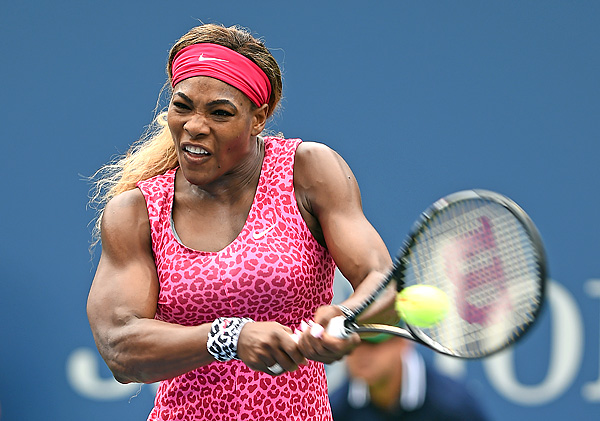
Is Serena Williams right or left-handed? >https://www.borntoworkout.com/wp-content/uploads/2017/04/Serena-Williams-Arms.jpg
Do you think that the blood vessels to her
dominant arm will be bigger than those to
the other?
OK, hominin fossils there are
slightly more numerous than those of
walrusses -- but not by enough for a set
of diffierent assumptions.
Hominidae represents about 5% of specimens in the Turkana Database of
13,548 published records, compared to 2% Felidae. I guess felids never
were a part of the ecology either.
. .Unless you're part of a community with cooperative multi-male groups. .
with mode 2 technology:
https://www.nature.com/articles/srep28766
"Mode 2 technology" is a joke -- in
multiple ways -- since its designators
haven't the slightest clue what the
bifaces were for.
Residue analysis would suggest otherwise: https://www.sciencedirect.com/science/article/abs/pii/S0047248400904664
. .
Now, what kind of woodworking could that have been?
In any case, this was. .
an ice-age and, most of the time, it
was far too dry and dusty in upland
areas for hominin occupation.
At the time of the Turkana Boy the paleoenvironment consisted of the perennial channels of the Omo River and shallow lakes or ponds that
would have persisted in topographic lows during the dry season. Much
of the floodbasin would have been floored by seasonally flooded
grasslands. The marsh in which the hominid bones were deposited was
likely a flood pan. Not so dry after all.
According to your hypothesis hominins were so rare they never were
part of the ecology and so were unlikely to have been the cause of
faunal turnover.
. .It has never prevented traditional hunter-gatherers such as the Hadza. .
and !Kung from making a living there.
"The Hadza do not obtain salt from the lake but many of
their natural water sources are distinctly brackish."
https://www.jstor.org/stable/41459776
. .
!Kung used to migrate great distances
seasonally, no doubt finding salt along
the way.
See, it's not so hard.
The illustration may well have come. .
from the hand of Frank Netter. If not
him, then someone from the same
tradition.
. .
"Frank Netter, the father of medical illustration?is work is 100 percent white people,"
Gray's Anatomy is now in its 42 edition, revised and updated with
every edition to reflect the latest developments, including racial
issues. It's the work of many qualified medical practioners.
It seems that in your world-picture you can only trust your own
experience, not that of others, nothing that has been handed on.
But then, you don't have your own experience with regard to such
anatomical detail as the blood circulation of the skin (you haven't
done your own dissections) or with regard to chimpanzee behaviour in
the wild.
. .
Again, you do not play the normal language game with regard to
knowledge.
For example, compare the younger
Obama with his current image. That
shock of fast-growing strong dark hair
would have needed much bigger
blood vessels than he has now.
. .
https://www.askideas.com/barack-obama-with-afro-hair-funny-political/
Hair is not muscle tissue. Hair is metabolically active only at the
root (follicle). No matter how big the bush on your head it requires
no more energy to grow and maintain then in a skinhead.
Has it ever occured to you that cutting your hair doesn't hurt?
That's because it's essentially dead tissue.
Yet, this most conspicuous human
feature is NEVER discussed in a
scientific PA paper. (If it has ever
been seriously discussed, I'll be most
surprised. ...
Yet, this most conspicuous human. .
feature is NEVER discussed in a
scientific PA paper. (If it has ever
been seriously discussed, I'll be most
surprised. ...
Sigh. I've discussed this in my 2 books & in my Med.Hypotheses articles.
On Monday 13 June 2022 at 11:09:40 UTC+1, Pandora wrote:
OK, hominin fossils there are
slightly more numerous than those of
walrusses -- but not by enough for a set
of diffierent assumptions.
Hominidae represents about 5% of specimens in the Turkana Database of
13,548 published records, compared to 2% Felidae. I guess felids never
were a part of the ecology either.
If you or I were curating a collection of
local fossils for vistors (and tourists?)
we'd be sure to include as many hominins
as possible -- at the expense of other
species.
. .Unless you're part of a community with cooperative multi-male groups. .
with mode 2 technology:
https://www.nature.com/articles/srep28766
"Mode 2 technology" is a joke -- in
multiple ways -- since its designators
haven't the slightest clue what the
bifaces were for.
Residue analysis would suggest otherwise:
https://www.sciencedirect.com/science/article/abs/pii/S0047248400904664
. .
Now, what kind of woodworking could that have been?
Each of these tools had a sharp edge all
around its circumference and all were for
the same kind of 'woodworking': >https://phys.org/news/2009-09-giant-stone-age-axes-african-lake.html >https://twitter.com/huw_groucutt/status/994940517275394048
In any case, this was. .
an ice-age and, most of the time, it
was far too dry and dusty in upland
areas for hominin occupation.
At the time of the Turkana Boy the paleoenvironment consisted of the
perennial channels of the Omo River and shallow lakes or ponds that
would have persisted in topographic lows during the dry season. Much
of the floodbasin would have been floored by seasonally flooded
grasslands. The marsh in which the hominid bones were deposited was
likely a flood pan. Not so dry after all.
Presumably during an inter-glacial.
The illustration may well have come. .
from the hand of Frank Netter. If not
him, then someone from the same
tradition.
. .
"Frank Netter, the father of medical illustration?is work is 100 percent white people,"
Gray's Anatomy is now in its 42 edition, revised and updated with
every edition to reflect the latest developments, including racial
issues. It's the work of many qualified medical practioners.
Blausen Medical, who provided that diagram,
is a private organisation based in Texas, and
is not Gray's Anatomy. The ONE diagram in
Wikipedia is likely to represent the most
common patient, or the most commonly seen
dissection.
It seems that in your world-picture you can only trust your own
experience, not that of others, nothing that has been handed on.
If anyone (in a position to know) had
claimed that the diagram represented
young Africans, I'd take them at their
word. No such claim has been made.
But then, you don't have your own experience with regard to such
anatomical detail as the blood circulation of the skin (you haven't
done your own dissections) or with regard to chimpanzee behaviour in
the wild.
. .
Again, you do not play the normal language game with regard to
knowledge.
This is nonsense. You are basing an
assessment on one diagram, produced
in an unknown context.
I acknowledge that I am more
sceptical than most. But then I have
wide experience of human institutions
and expect them to be, pretty much,
as bad as each other. Would PA be
better if Donald Trump or Vladimir
Putin were in charge?
For example, compare the younger
Obama with his current image. That
shock of fast-growing strong dark hair
would have needed much bigger
blood vessels than he has now.
. .
https://www.askideas.com/barack-obama-with-afro-hair-funny-political/
Hair is not muscle tissue. Hair is metabolically active only at the
root (follicle). No matter how big the bush on your head it requires
no more energy to grow and maintain then in a skinhead.
Has it ever occured to you that cutting your hair doesn't hurt?
That's because it's essentially dead tissue.
Like Obama now, I have far less 'dead
tissue' on my head than when we were
20 years old. That's because our root
follicles are very much fewer and far less
productive. His follicles at age 20 would
have been far in excess of mine at the
same age. Youthful African hair is very
different -- as any barber or hair stylist
will tell you. Africans require their own
barbers/stylists. Those used only to
European hair simply can't cope with it.
The blood supply to African follicles is (at
a guess) ten to a hundred times the level
for whites. That's why the arms of
Serena Williams are relevant.
This matters in PA, because Afro hair
is generally taken as the ancestral
form with European and Asian hair
as derived from it, evolving under
different conditions. African hair is
'expensive' in terms of resources so,
whenever it ceased to be essential,
less-demanding weaker forms
emerged.
Yet, this most conspicuous human
feature is NEVER discussed in a
scientific PA paper. (If it has ever
been seriously discussed, I'll be most
surprised.) What is it for? Insulation
against the sun is not applicable. The
rest of the body is naked.
Why do males grow beards?
On Mon, 13 Jun 2022 15:18:55 -0700 (PDT), Paul Crowley
<[email protected]> wrote:
On Monday 13 June 2022 at 11:09:40 UTC+1, Pandora wrote:
OK, hominin fossils there are
slightly more numerous than those of
walrusses -- but not by enough for a set
of diffierent assumptions.
Hominidae represents about 5% of specimens in the Turkana Database of
13,548 published records, compared to 2% Felidae. I guess felids never
were a part of the ecology either.
If you or I were curating a collection ofThe average visitor/tourist is generally more impressed by sabertooths
local fossils for vistors (and tourists?)
we'd be sure to include as many hominins
as possible -- at the expense of other
species.
and elephants than by hominins. Anyway, they'll be viewing replicas of
the most complete specimens, which constitute a minority. The research collection is not accessible to the public.
. .Unless you're part of a community with cooperative multi-male groups >>>> with mode 2 technology:. .
https://www.nature.com/articles/srep28766
"Mode 2 technology" is a joke -- in
multiple ways -- since its designators
haven't the slightest clue what the
bifaces were for.
Residue analysis would suggest otherwise:
https://www.sciencedirect.com/science/article/abs/pii/S0047248400904664 >> . .
Now, what kind of woodworking could that have been?
Each of these tools had a sharp edge allObviously the range of sizes suggests different uses.
around its circumference and all were for
the same kind of 'woodworking': >https://phys.org/news/2009-09-giant-stone-age-axes-african-lake.html >https://twitter.com/huw_groucutt/status/994940517275394048
Foulds et al.(2017) have an interesting hypothesis with regard to the
giant ones: https://doi.org/10.15184/aqy.2017.153
"Despite the lack of extensive reduction used to form its overall
shape, it seems reasonable to suggest that this large handaxe was made
for a clear utilitarian purpose. This is supported by the fact that it conforms closely to other handaxes within the assemblage, most notably
in the increased reduction intensity around the tip to create
a cutting edge. It may perhaps have been employed as a static tool,
with hominins resting the handaxe on the ground, secured between an individual’s legs, and resources brought down on the tip for
processing. In this way it could have been used to process faunal
remains to access meat and marrow. Sites such as Isimila,
Elandsfontein and Doornlaagte have provided examples of similar tools
that were found on their edges when excavated, as if pressed into the ground"
Or perhaps is was used in that position to process branches into
spears.
In any case, this was. .
an ice-age and, most of the time, it
was far too dry and dusty in upland
areas for hominin occupation.
At the time of the Turkana Boy the paleoenvironment consisted of the
perennial channels of the Omo River and shallow lakes or ponds that
would have persisted in topographic lows during the dry season. Much
of the floodbasin would have been floored by seasonally flooded
grasslands. The marsh in which the hominid bones were deposited was
likely a flood pan. Not so dry after all.
Presumably during an inter-glacial.Unlikely, because there is no conclusive evidence of a major lake at
this time, like today.
The illustration may well have come. .
from the hand of Frank Netter. If not
him, then someone from the same
tradition.
. .
"Frank Netter, the father of medical illustration?is work is 100 percent white people,"
Gray's Anatomy is now in its 42 edition, revised and updated with
every edition to reflect the latest developments, including racial
issues. It's the work of many qualified medical practioners.
Blausen Medical, who provided that diagram,You'll find similar illustrations in the latest edition of Gray's
is a private organisation based in Texas, and
is not Gray's Anatomy. The ONE diagram in
Wikipedia is likely to represent the most
common patient, or the most commonly seen
dissection.
Anatomy because that is the basic anatomy of human skin, with most
racial variation in the degree of pigmentation.
It seems that in your world-picture you can only trust your own
experience, not that of others, nothing that has been handed on.
If anyone (in a position to know) had
claimed that the diagram represented
young Africans, I'd take them at their
word. No such claim has been made.
But then, you don't have your own experience with regard to such
anatomical detail as the blood circulation of the skin (you haven't
done your own dissections) or with regard to chimpanzee behaviour in
the wild.
. .
Again, you do not play the normal language game with regard to
knowledge.
This is nonsense. You are basing an
assessment on one diagram, produced
in an unknown context.
I acknowledge that I am moreYour attitude is way beyond skepsis.
sceptical than most. But then I have
wide experience of human institutions
and expect them to be, pretty much,
as bad as each other. Would PA be
better if Donald Trump or Vladimir
Putin were in charge?
It's paranoid.
For example, compare the younger
Obama with his current image. That
shock of fast-growing strong dark hair
would have needed much bigger
blood vessels than he has now.
. .
https://www.askideas.com/barack-obama-with-afro-hair-funny-political/
Hair is not muscle tissue. Hair is metabolically active only at the
root (follicle). No matter how big the bush on your head it requires
no more energy to grow and maintain then in a skinhead.
Has it ever occured to you that cutting your hair doesn't hurt?
That's because it's essentially dead tissue.
Like Obama now, I have far less 'deadIt's relevant with regard to asymmetry due to pronounced unilateral
tissue' on my head than when we were
20 years old. That's because our root
follicles are very much fewer and far less
productive. His follicles at age 20 would
have been far in excess of mine at the
same age. Youthful African hair is very
different -- as any barber or hair stylist
will tell you. Africans require their own
barbers/stylists. Those used only to
European hair simply can't cope with it.
The blood supply to African follicles is (at
a guess) ten to a hundred times the level
for whites. That's why the arms of
Serena Williams are relevant.
physical activity. This is a well-known feature in tennis-players, not
only with regrard to muscle mass, but also bone robusticity: https://onlinelibrary.wiley.com/doi/10.1002/ajpa.1330930102
But Serena doesn't grow more hair on her tennis arm due to greater
blood supply.
This matters in PA, because Afro hairActually, people of African descent have on average some of the lowest
is generally taken as the ancestral
form with European and Asian hair
as derived from it, evolving under
different conditions. African hair is
'expensive' in terms of resources so,
whenever it ceased to be essential,
less-demanding weaker forms
emerged.
hair densities and growth rates, and median hair diameter. https://link.springer.com/article/10.1684/ejd.2015.2726 https://www.karger.com/article/fulltext/485522
That does not support your expensive tissue hypothesis.
You've been misled by appearances, a full head of afro is more
impressive than a crew cut.
Yet, this most conspicuous humanWhy do males grow beards?
feature is NEVER discussed in a
scientific PA paper. (If it has ever
been seriously discussed, I'll be most
surprised.) What is it for? Insulation
against the sun is not applicable. The
rest of the body is naked.
On Tuesday, June 14, 2022 at 8:50:15 AM UTC-4, Pandora wrote:
On Mon, 13 Jun 2022 15:18:55 -0700 (PDT), Paul Crowley
<[email protected]> wrote:
On Monday 13 June 2022 at 11:09:40 UTC+1, Pandora wrote:
OK, hominin fossils there are
slightly more numerous than those of
walrusses -- but not by enough for a set
of diffierent assumptions.
Hominidae represents about 5% of specimens in the Turkana Database of >> 13,548 published records, compared to 2% Felidae. I guess felids never >> were a part of the ecology either.
If you or I were curating a collection ofThe average visitor/tourist is generally more impressed by sabertooths
local fossils for vistors (and tourists?)
we'd be sure to include as many hominins
as possible -- at the expense of other
species.
and elephants than by hominins. Anyway, they'll be viewing replicas of
the most complete specimens, which constitute a minority. The research collection is not accessible to the public.
. .Unless you're part of a community with cooperative multi-male groups >>>> with mode 2 technology:. .
https://www.nature.com/articles/srep28766
"Mode 2 technology" is a joke -- in
multiple ways -- since its designators
haven't the slightest clue what the
bifaces were for.
Residue analysis would suggest otherwise:
https://www.sciencedirect.com/science/article/abs/pii/S0047248400904664 >> . .
Now, what kind of woodworking could that have been?
Each of these tools had a sharp edge allObviously the range of sizes suggests different uses.
around its circumference and all were for
the same kind of 'woodworking': >https://phys.org/news/2009-09-giant-stone-age-axes-african-lake.html >https://twitter.com/huw_groucutt/status/994940517275394048
Foulds et al.(2017) have an interesting hypothesis with regard to the giant ones: https://doi.org/10.15184/aqy.2017.153
"Despite the lack of extensive reduction used to form its overall
shape, it seems reasonable to suggest that this large handaxe was made
for a clear utilitarian purpose. This is supported by the fact that it conforms closely to other handaxes within the assemblage, most notably
in the increased reduction intensity around the tip to create
a cutting edge. It may perhaps have been employed as a static tool,
with hominins resting the handaxe on the ground, secured between an individual’s legs, and resources brought down on the tip for
processing. In this way it could have been used to process faunal
remains to access meat and marrow. Sites such as Isimila,
Elandsfontein and Doornlaagte have provided examples of similar tools
that were found on their edges when excavated, as if pressed into the ground"
Or perhaps is was used in that position to process branches into
spears.
In any case, this was. .
an ice-age and, most of the time, it
was far too dry and dusty in upland
areas for hominin occupation.
At the time of the Turkana Boy the paleoenvironment consisted of the
perennial channels of the Omo River and shallow lakes or ponds that
would have persisted in topographic lows during the dry season. Much
of the floodbasin would have been floored by seasonally flooded
grasslands. The marsh in which the hominid bones were deposited was
likely a flood pan. Not so dry after all.
Presumably during an inter-glacial.Unlikely, because there is no conclusive evidence of a major lake at
this time, like today.
The illustration may well have come. .
from the hand of Frank Netter. If not
him, then someone from the same
tradition.
. .
"Frank Netter, the father of medical illustration?is work is 100 percent white people,"
Gray's Anatomy is now in its 42 edition, revised and updated with
every edition to reflect the latest developments, including racial
issues. It's the work of many qualified medical practioners.
Blausen Medical, who provided that diagram,You'll find similar illustrations in the latest edition of Gray's
is a private organisation based in Texas, and
is not Gray's Anatomy. The ONE diagram in
Wikipedia is likely to represent the most
common patient, or the most commonly seen
dissection.
Anatomy because that is the basic anatomy of human skin, with most
racial variation in the degree of pigmentation.
It seems that in your world-picture you can only trust your own
experience, not that of others, nothing that has been handed on.
If anyone (in a position to know) had
claimed that the diagram represented
young Africans, I'd take them at their
word. No such claim has been made.
But then, you don't have your own experience with regard to such
anatomical detail as the blood circulation of the skin (you haven't
done your own dissections) or with regard to chimpanzee behaviour in
the wild.
. .
Again, you do not play the normal language game with regard to
knowledge.
This is nonsense. You are basing an
assessment on one diagram, produced
in an unknown context.
I acknowledge that I am moreYour attitude is way beyond skepsis.
sceptical than most. But then I have
wide experience of human institutions
and expect them to be, pretty much,
as bad as each other. Would PA be
better if Donald Trump or Vladimir
Putin were in charge?
It's paranoid.
For example, compare the younger
Obama with his current image. That
shock of fast-growing strong dark hair
would have needed much bigger
blood vessels than he has now.
. .
https://www.askideas.com/barack-obama-with-afro-hair-funny-political/
Hair is not muscle tissue. Hair is metabolically active only at the
root (follicle). No matter how big the bush on your head it requires
no more energy to grow and maintain then in a skinhead.
Has it ever occured to you that cutting your hair doesn't hurt?
That's because it's essentially dead tissue.
Like Obama now, I have far less 'deadIt's relevant with regard to asymmetry due to pronounced unilateral physical activity. This is a well-known feature in tennis-players, not only with regrard to muscle mass, but also bone robusticity: https://onlinelibrary.wiley.com/doi/10.1002/ajpa.1330930102
tissue' on my head than when we were
20 years old. That's because our root
follicles are very much fewer and far less
productive. His follicles at age 20 would
have been far in excess of mine at the
same age. Youthful African hair is very
different -- as any barber or hair stylist
will tell you. Africans require their own
barbers/stylists. Those used only to
European hair simply can't cope with it.
The blood supply to African follicles is (at
a guess) ten to a hundred times the level
for whites. That's why the arms of
Serena Williams are relevant.
But Serena doesn't grow more hair on her tennis arm due to greaterAfro hair is obviously derived.
blood supply.
This matters in PA, because Afro hair
is generally taken as the ancestral
form with European and Asian hair
as derived from it, evolving under
different conditions.
In SW Australia, the oldest DNA signature is in people with the straightest hair (which is round in cross-section). People in Papua and east Australia have curlier hair and have later DNA signatures.
African hair is
'expensive' in terms of resources so,Actually, people of African descent have on average some of the lowest hair densities and growth rates, and median hair diameter. https://link.springer.com/article/10.1684/ejd.2015.2726 https://www.karger.com/article/fulltext/485522
whenever it ceased to be essential,
less-demanding weaker forms
emerged.
That does not support your expensive tissue hypothesis.
You've been misled by appearances, a full head of afro is more
impressive than a crew cut.
Yet, this most conspicuous humanWhy do males grow beards?
feature is NEVER discussed in a
scientific PA paper. (If it has ever
been seriously discussed, I'll be most
surprised.) What is it for? Insulation
against the sun is not applicable. The
rest of the body is naked.
On Mon, 13 Jun 2022 15:18:55 -0700 (PDT), Paul Crowley
<[email protected]> wrote:
On Monday 13 June 2022 at 11:09:40 UTC+1, Pandora wrote:
OK, hominin fossils there are
slightly more numerous than those of
walrusses -- but not by enough for a set
of diffierent assumptions.
Hominidae represents about 5% of specimens in the Turkana Database of
13,548 published records, compared to 2% Felidae. I guess felids never
were a part of the ecology either.
If you or I were curating a collection ofThe average visitor/tourist is generally more impressed by sabertooths
local fossils for vistors (and tourists?)
we'd be sure to include as many hominins
as possible -- at the expense of other
species.
and elephants than by hominins. Anyway, they'll be viewing replicas of
the most complete specimens, which constitute a minority. The research collection is not accessible to the public.
. .Unless you're part of a community with cooperative multi-male groups >>>> with mode 2 technology:. .
https://www.nature.com/articles/srep28766
"Mode 2 technology" is a joke -- in
multiple ways -- since its designators
haven't the slightest clue what the
bifaces were for.
Residue analysis would suggest otherwise:
https://www.sciencedirect.com/science/article/abs/pii/S0047248400904664 >> . .
Now, what kind of woodworking could that have been?
Each of these tools had a sharp edge allObviously the range of sizes suggests different uses.
around its circumference and all were for
the same kind of 'woodworking': >https://phys.org/news/2009-09-giant-stone-age-axes-african-lake.html >https://twitter.com/huw_groucutt/status/994940517275394048
Foulds et al.(2017) have an interesting hypothesis with regard to the
giant ones: https://doi.org/10.15184/aqy.2017.153
"Despite the lack of extensive reduction used to form its overall
shape, it seems reasonable to suggest that this large handaxe was made
for a clear utilitarian purpose. This is supported by the fact that it conforms closely to other handaxes within the assemblage, most notably
in the increased reduction intensity around the tip to create
a cutting edge. It may perhaps have been employed as a static tool,
with hominins resting the handaxe on the ground, secured between an individual’s legs, and resources brought down on the tip for
processing. In this way it could have been used to process faunal
remains to access meat and marrow. Sites such as Isimila,
Elandsfontein and Doornlaagte have provided examples of similar tools
that were found on their edges when excavated, as if pressed into the ground"
Or perhaps is was used in that position to process branches into
spears.
In any case, this was. .
an ice-age and, most of the time, it
was far too dry and dusty in upland
areas for hominin occupation.
At the time of the Turkana Boy the paleoenvironment consisted of the
perennial channels of the Omo River and shallow lakes or ponds that
would have persisted in topographic lows during the dry season. Much
of the floodbasin would have been floored by seasonally flooded
grasslands. The marsh in which the hominid bones were deposited was
likely a flood pan. Not so dry after all.
Presumably during an inter-glacial.Unlikely, because there is no conclusive evidence of a major lake at
this time, like today.
The illustration may well have come. .
from the hand of Frank Netter. If not
him, then someone from the same
tradition.
. .
"Frank Netter, the father of medical illustration?is work is 100 percent white people,"
Gray's Anatomy is now in its 42 edition, revised and updated with
every edition to reflect the latest developments, including racial
issues. It's the work of many qualified medical practioners.
Blausen Medical, who provided that diagram,You'll find similar illustrations in the latest edition of Gray's
is a private organisation based in Texas, and
is not Gray's Anatomy. The ONE diagram in
Wikipedia is likely to represent the most
common patient, or the most commonly seen
dissection.
Anatomy because that is the basic anatomy of human skin, with most
racial variation in the degree of pigmentation.
It seems that in your world-picture you can only trust your own
experience, not that of others, nothing that has been handed on.
If anyone (in a position to know) had
claimed that the diagram represented
young Africans, I'd take them at their
word. No such claim has been made.
But then, you don't have your own experience with regard to such
anatomical detail as the blood circulation of the skin (you haven't
done your own dissections) or with regard to chimpanzee behaviour in
the wild.
. .
Again, you do not play the normal language game with regard to
knowledge.
This is nonsense. You are basing an
assessment on one diagram, produced
in an unknown context.
I acknowledge that I am moreYour attitude is way beyond skepsis.
sceptical than most. But then I have
wide experience of human institutions
and expect them to be, pretty much,
as bad as each other. Would PA be
better if Donald Trump or Vladimir
Putin were in charge?
It's paranoid.
For example, compare the younger
Obama with his current image. That
shock of fast-growing strong dark hair
would have needed much bigger
blood vessels than he has now.
. .
https://www.askideas.com/barack-obama-with-afro-hair-funny-political/
Hair is not muscle tissue. Hair is metabolically active only at the
root (follicle). No matter how big the bush on your head it requires
no more energy to grow and maintain then in a skinhead.
Has it ever occured to you that cutting your hair doesn't hurt?
That's because it's essentially dead tissue.
Like Obama now, I have far less 'deadIt's relevant with regard to asymmetry due to pronounced unilateral
tissue' on my head than when we were
20 years old. That's because our root
follicles are very much fewer and far less
productive. His follicles at age 20 would
have been far in excess of mine at the
same age. Youthful African hair is very
different -- as any barber or hair stylist
will tell you. Africans require their own
barbers/stylists. Those used only to
European hair simply can't cope with it.
The blood supply to African follicles is (at
a guess) ten to a hundred times the level
for whites. That's why the arms of
Serena Williams are relevant.
physical activity. This is a well-known feature in tennis-players, not
only with regrard to muscle mass, but also bone robusticity: https://onlinelibrary.wiley.com/doi/10.1002/ajpa.1330930102
But Serena doesn't grow more hair on her tennis arm due to greater
blood supply.
This matters in PA, because Afro hair
is generally taken as the ancestral
form with European and Asian hair
as derived from it, evolving under
different conditions.
'expensive' in terms of resources so,Actually, people of African descent have on average some of the lowest
whenever it ceased to be essential,
less-demanding weaker forms
emerged.
hair densities and growth rates, and median hair diameter. https://link.springer.com/article/10.1684/ejd.2015.2726 https://www.karger.com/article/fulltext/485522
That does not support your expensive tissue hypothesis.
You've been misled by appearances, a full head of afro is more
impressive than a crew cut.
Yet, this most conspicuous humanWhy do males grow beards?
feature is NEVER discussed in a
scientific PA paper. (If it has ever
been seriously discussed, I'll be most
surprised.) What is it for? Insulation
against the sun is not applicable. The
rest of the body is naked.
On Monday 13 June 2022 at 11:09:40 UTC+1, Pandora wrote:
OK, hominin fossils there are
slightly more numerous than those of
walrusses -- but not by enough for a set
of diffierent assumptions.
Hominidae represents about 5% of specimens in the Turkana Database of 13,548 published records, compared to 2% Felidae. I guess felids neverIf you or I were curating a collection of
were a part of the ecology either.
local fossils for vistors (and tourists?)
we'd be sure to include as many hominins
as possible -- at the expense of other
species.
Each of these tools had a sharp edge all. .Unless you're part of a community with cooperative multi-male groups. .
with mode 2 technology:
https://www.nature.com/articles/srep28766
"Mode 2 technology" is a joke -- in
multiple ways -- since its designators
haven't the slightest clue what the
bifaces were for.
Residue analysis would suggest otherwise: https://www.sciencedirect.com/science/article/abs/pii/S0047248400904664
. .
Now, what kind of woodworking could that have been?
around its circumference and all were for
the same kind of 'woodworking': https://phys.org/news/2009-09-giant-stone-age-axes-african-lake.html https://twitter.com/huw_groucutt/status/994940517275394048
The 'study' of 'handaxes' appears to
require an extreme form of dumbness,
-- beyond even the range of the present
British Cabinet under Johnson. Would
"Mad Nad" make a good PA?
Presumably during an inter-glacial.In any case, this was. .
an ice-age and, most of the time, it
was far too dry and dusty in upland
areas for hominin occupation.
At the time of the Turkana Boy the paleoenvironment consisted of the perennial channels of the Omo River and shallow lakes or ponds that
would have persisted in topographic lows during the dry season. Much
of the floodbasin would have been floored by seasonally flooded
grasslands. The marsh in which the hominid bones were deposited was
likely a flood pan. Not so dry after all.
According to your hypothesis hominins were so rare they never wereThey were common enough to leave
part of the ecology and so were unlikely to have been the cause of
faunal turnover.
billions upon billions of 'hand-axes'
(all presumably left during inter-
glacials). That STILL does not mean
that there were viable hominin
populations in the area. In fact, it
demonstrates the opposite. Those
making, using and apparently
discarding (in near-perfect condition)
these 'wood-working tools' did NOT
bring their females with them. Those
billions upon billions were consumed
in a constant effort to suppress the
relatively high levels of carnivores (+
omnivores) in the locality, meaning
that hominin infants would have
been in too much danger.
It's very hard. Human populations. .It has never prevented traditional hunter-gatherers such as the Hadza. .
and !Kung from making a living there.
"The Hadza do not obtain salt from the lake but many of
their natural water sources are distinctly brackish."
https://www.jstor.org/stable/41459776
. .
!Kung used to migrate great distances
seasonally, no doubt finding salt along
the way.
See, it's not so hard.
with high technology can -- just about
-- survive. But it's not an environment
in which they'd evolve.
Blausen Medical, who provided that diagram,The illustration may well have come. .
from the hand of Frank Netter. If not
him, then someone from the same
tradition.
. .
"Frank Netter, the father of medical illustration?is work is 100 percent white people,"
Gray's Anatomy is now in its 42 edition, revised and updated with
every edition to reflect the latest developments, including racial
issues. It's the work of many qualified medical practioners.
is a private organisation based in Texas, and
is not Gray's Anatomy. The ONE diagram in
Wikipedia is likely to represent the most
common patient, or the most commonly seen
dissection.
It seems that in your world-picture you can only trust your ownIf anyone (in a position to know) had
experience, not that of others, nothing that has been handed on.
claimed that the diagram represented
young Africans, I'd take them at their
word. No such claim has been made.
But then, you don't have your own experience with regard to suchThis is nonsense. You are basing an
anatomical detail as the blood circulation of the skin (you haven't
done your own dissections) or with regard to chimpanzee behaviour in
the wild.
. .
Again, you do not play the normal language game with regard to
knowledge.
assessment on one diagram, produced
in an unknown context.
I acknowledge that I am more
sceptical than most. But then I have
wide experience of human institutions
and expect them to be, pretty much,
as bad as each other. Would PA be
better if Donald Trump or Vladimir
Putin were in charge?
Like Obama now, I have far less 'deadHair is not muscle tissue. Hair is metabolically active only at theFor example, compare the younger
Obama with his current image. That
shock of fast-growing strong dark hair
would have needed much bigger
blood vessels than he has now.
. .
https://www.askideas.com/barack-obama-with-afro-hair-funny-political/
root (follicle). No matter how big the bush on your head it requires
no more energy to grow and maintain then in a skinhead.
Has it ever occured to you that cutting your hair doesn't hurt?
That's because it's essentially dead tissue.
tissue' on my head than when we were
20 years old. That's because our root
follicles are very much fewer and far less
productive. His follicles at age 20 would
have been far in excess of mine at the
same age. Youthful African hair is very
different -- as any barber or hair stylist
will tell you. Africans require their own
barbers/stylists. Those used only to
European hair simply can't cope with it.
The blood supply to African follicles is (at
a guess) ten to a hundred times the level
for whites. That's why the arms of
Serena Williams are relevant.
This matters in PA, because Afro hair
is generally taken as the ancestral
form with European and Asian hair
as derived from it, evolving under
different conditions. African hair is
'expensive' in terms of resources so,
whenever it ceased to be essential,
less-demanding weaker forms
emerged.
Yet, this most conspicuous human
feature is NEVER discussed in a
scientific PA paper. (If it has ever
been seriously discussed, I'll be most
surprised.) What is it for? Insulation
against the sun is not applicable. The
rest of the body is naked.
dominance battles (better to have a beard gripped & ripped than one's throat.).Why do males grow beards?
Rather why (how) did female Homo reduce the beard so drastically? Post-menopausal women tend to grow more facial hair.
Beards were simply easily grasped hair for piggyback riding babies.
The derived habit of wearing clothes, net bags, tumplines, pelts, baskets etc. gave advantages culturally/economically in carrying efficiency, and beards of mothers lost their benefit. Males retained theirs as defensive throat-protection in inter-male
Op woensdag 15 juni 2022 om 05:09:24 UTC+2 schreef DD'eDeN aka note/nickname/alas_my_loves:male dominance battles (better to have a beard gripped & ripped than one's throat.).
...
Why do males grow beards?
Rather why (how) did female Homo reduce the beard so drastically? Post-menopausal women tend to grow more facial hair.
Beards were simply easily grasped hair for piggyback riding babies.
The derived habit of wearing clothes, net bags, tumplines, pelts, baskets etc. gave advantages culturally/economically in carrying efficiency, and beards of mothers lost their benefit. Males retained theirs as defensive throat-protection in inter-
:-DDDAsks the beardless dutch child.
Already caught your kudu, my boy?
Why do males grow beards?
Don't you know?
1987 Med Hypoth 24:293-9
"The aquatic ape theory and some common diseases"
Op woensdag 15 juni 2022 om 05:09:24 UTC+2 schreef DD'eDeN aka note/nickname/alas_my_loves:male dominance battles (better to have a beard gripped & ripped than one's throat.).
...
Why do males grow beards?
Rather why (how) did female Homo reduce the beard so drastically? Post-menopausal women tend to grow more facial hair.
Beards were simply easily grasped hair for piggyback riding babies.
The derived habit of wearing clothes, net bags, tumplines, pelts, baskets etc. gave advantages culturally/economically in carrying efficiency, and beards of mothers lost their benefit. Males retained theirs as defensive throat-protection in inter-
:-DDD
Already caught your kudu, my boy?
Why do males grow beards?
Don't you know?
1987 Med Hypoth 24:293-9
"The aquatic ape theory and some common diseases"
"so that the male's neck was streamlined for a swimming
life-style"
Then why only males?
Koedoes on the brain, meine kleine tochter?
On Wednesday, June 15, 2022 at 2:06:30 AM UTC-4, [email protected] wrote:male dominance battles (better to have a beard gripped & ripped than one's throat.).
Op woensdag 15 juni 2022 om 05:09:24 UTC+2 schreef DD'eDeN aka note/nickname/alas_my_loves:
...
Why do males grow beards?
Rather why (how) did female Homo reduce the beard so drastically? Post-menopausal women tend to grow more facial hair.
Beards were simply easily grasped hair for piggyback riding babies.
The derived habit of wearing clothes, net bags, tumplines, pelts, baskets etc. gave advantages culturally/economically in carrying efficiency, and beards of mothers lost their benefit. Males retained theirs as defensive throat-protection in inter-
:-DDD
Already caught your kudu, my boy?Koedoes on the brain, meine kleine tochter? (Prions?)
Koedoes Residency (Dutch: Residentie Koedoes) was an administrative division (Residency) of Central Java province of the Dutch East Indies with its capital at Kudus, which existed between 1928 and 1931.[1]
Learn some history, please.
Start with a prehistoric Dutch fish trap here: https://images.app.goo.gl/tqeZq8nVCNxxAhpF8
That is derived from a wicker domeshield. In India it is called "kudu", in Dutch "koedoe".
Dubois chased H erectus at Kudus, Ngandong, Trinil, Mojokerto, Solo river, by walking in the same area:
https://images.app.goo.gl/ekfk3W8SZsRTrbq6A https://images.app.goo.gl/omPGxMSnWzUiDXGt9
No need for mermaid detours! Just follow Kudus!
Op woensdag 15 juni 2022 om 12:17:46 UTC+2 schreef DD'eDeN aka note/nickname/alas_my_loves:
Dubois chased H erectus at Kudus, Ngandong, Trinil, Mojokerto, Solo river, by walking in the same area:If you understand a bit of Dutch (??), this is from my new book:
https://images.app.goo.gl/ekfk3W8SZsRTrbq6A https://images.app.goo.gl/omPGxMSnWzUiDXGt9
No need for mermaid detours! Just follow Kudus!
Homo erectus is gevonden in aanslibvlaktes, kustmoerassen en rivierdelta’s, vaak in papyrus- en rietbedden. Maar hoe representatief is dat? Zijn kusten traditioneel onderschat als leefmilieu? Golven, eb en vloed, springtij, tsunami’s, wisselendezeenivo’s en geologische processen hinderen fossilisatie. Stephen Munro heeft voor zijn antropologie-thesis lijsten gemaakt van de weekdieren in hominide vindplaatsen: altijd waren er massa’s water, typisch met tweekleppigen. Homo en australopitheken
Het Mojokerto-kind (~1,8 Ma?) kwam uit een brede delta vol zeepokken, koralen, zee- en zoetwaterschelpen wijzend op mangroves, strand en moddervlaktes, met fossiele botten van olifanten, neushoorns en nijlpaarden, zwijnen, tapirs, buffels en antilopes,tijgers, hondachtigen en apen. Het schedeldak en dijbot van Trinil lagen volgens José Joordens bij eetbare zoetwaterschelpen (Pseudodon en Elongaria). En Sangiran-17 (~1,6 Ma?), de meest intacte schedel op Java, kwam uit een brakwatermoeras aan de kust.
In Yuanmou in Zuid-West-China lagen erectus-achtige snijtanden en stenen werktuigen (~1,7 Ma) nabij een moeras of meer toen vol schelpdieren (Zhu 2008). In Aïn-Hanech en el-Kherba in Algerije lagen werktuigen in een wijde riviermond (~1,8 Ma), en inIran aan een uitgestrekt meer (paleo-lake, Dennell 2003). In Dmanisi in Georgië (~1,8 Ma) vond David Lordkipanidze georgicus-fossielen aan of in ‘een meer of vijver rijk aan lacustriene voedselbronnen’, waar grote rivieren samenstroomden naar de
Koedoes on the brain, meine kleine tochter?
Btw, do you know what dubois means? Of the woods.
Btw, do you know what dubois means? Of the woods.No, my little boy: of the wood.
What do you know: no Dutch, no French, no anthropology...
Op woensdag 15 juni 2022 om 10:39:07 UTC+2 schreef Pandora:
Why do males grow beards?
Don't you know?
1987 Med Hypoth 24:293-9
"The aquatic ape theory and some common diseases"
"so that the male's neck was streamlined for a swimming
life-style"
:-) Good boy!
Then why only males?
Ever heard of children?
Menopauze = no children.
On Wed, 15 Jun 2022 04:11:53 -0700 (PDT), "[email protected]" <[email protected]> wrote:
Op woensdag 15 juni 2022 om 10:39:07 UTC+2 schreef Pandora:
Why do males grow beards?
Don't you know?
1987 Med Hypoth 24:293-9
"The aquatic ape theory and some common diseases"
"so that the male's neck was streamlined for a swimming
life-style"
:-) Good boy!
Then why only males?
Ever heard of children?So?
Menopauze = no children.
What does that have to do with male facial hair?
Why do males grow beards?
Don't you know? 1987 Med Hypoth 24:293-9
"The aquatic ape theory and some common diseases"
"so that the male's neck was streamlined for a swimming
life-style"
:-) Good boy!
Then why only males?
Ever heard of children?
Menopauze = no children.
So? What does that have to do with male facial hair?
https://www.academia.edu/9566466/Marc_Verhaegen_1985_1995_Medical_Hypotheses_papers_on_AAT?email_work_card=title
That's a non-answer that doesn't point to any specifics.
If beards were for streamlining for a swimming life-style then they
would serve females as well.
Op donderdag 16 juni 2022 om 15:47:24 UTC+2 schreef Pandora:
On Wed, 15 Jun 2022 04:11:53 -0700 (PDT), "[email protected]"
<[email protected]> wrote:
Op woensdag 15 juni 2022 om 10:39:07 UTC+2 schreef Pandora:So?
Why do males grow beards?
Don't you know?
1987 Med Hypoth 24:293-9
"The aquatic ape theory and some common diseases"
"so that the male's neck was streamlined for a swimming
life-style"
:-) Good boy!
Then why only males?
Ever heard of children?
Menopauze = no children.
What does that have to do with male facial hair?
https://www.academia.edu/9566466/Marc_Verhaegen_1985_1995_Medical_Hypotheses_papers_on_AAT?email_work_card=title
Why do males grow beards?
Don't you know? 1987 Med Hypoth 24:293-9
"The aquatic ape theory and some common diseases"
"so that the male's neck was streamlined for a swimming
life-style"
:-) Good boy!
Then why only males?
Ever heard of children? Menopauze = no children.
So? What does that have to do with male facial hair?
https://www.academia.edu/9566466/Marc_Verhaegen_1985_1995_Medical_Hypotheses_papers_on_AAT?email_work_card=title
That's a non-answer that doesn't point to any specifics.
It's the best answer: inform before talking.
If beards were for streamlining for a swimming life-style then they
would serve females as well.
Again: fertile women have children.
Fertile men too.
Op vrijdag 17 juni 2022 om 11:23:21 UTC+2 schreef Pandora:
...
Why do males grow beards?
Don't you know? 1987 Med Hypoth 24:293-9
"The aquatic ape theory and some common diseases"
"so that the male's neck was streamlined for a swimming
life-style"
:-) Good boy!
Then why only males?
Ever heard of children?
Menopauze = no children.
So? What does that have to do with male facial hair?
https://www.academia.edu/9566466/Marc_Verhaegen_1985_1995_Medical_Hypotheses_papers_on_AAT?email_work_card=title
That's a non-answer that doesn't point to any specifics.
It's the best answer: inform before talking.
If beards were for streamlining for a swimming life-style then they
would serve females as well.
Again: fertile women have children.
Op vrijdag 17 juni 2022 om 11:23:21 UTC+2 schreef Pandora:
...
Why do males grow beards?
Don't you know? 1987 Med Hypoth 24:293-9
"The aquatic ape theory and some common diseases"
"so that the male's neck was streamlined for a swimming
life-style"
:-) Good boy!
Then why only males?
Ever heard of children?
Menopauze = no children.
So? What does that have to do with male facial hair?
https://www.academia.edu/9566466/Marc_Verhaegen_1985_1995_Medical_Hypotheses_papers_on_AAT?email_work_card=title
That's a non-answer that doesn't point to any specifics.It's the best answer: inform before talking.
If beards were for streamlining for a swimming life-style then theyAgain: fertile women have children.
would serve females as well.
MV has no answer.
Op vrijdag 17 juni 2022 om 13:31:43 UTC+2 schreef DD'eDeN aka note/nickname/alas_my_loves:
MV has no answer.
Liar.
"Homo coastal dispersal Verhaegen",
"WHAT talk Verhaegen".
MV has no answer.
Liar.
No answer, just a fantasy.
Primum Sapienti wrote:
<https://www.academia.edu/9566466/Marc_Verhaegen_1985_1995_Medical_Hypotheses_papers_on_AAT>
"When the Moustier Neandertal was excavated (1908), the nostrils, which
could still be discerned then, were situated at the top instead of underneath
the nose as in H.sapiens(55)."
You're not an "Elaborate" thinker, to borrow a term, so let me help you out a little here: What do you think might establish the validity of the claim?
| Sysop: | Keyop |
|---|---|
| Location: | Huddersfield, West Yorkshire, UK |
| Users: | 741 |
| Nodes: | 16 (2 / 14) |
| Uptime: | 127:10:06 |
| Calls: | 12,470 |
| Files: | 15,200 |
| Messages: | 6,538,440 |