If the sodastream is unregulated, then I'm guessing the sodastream squirts >the carbon dioxide gas at a bit over 800 psi up to over 1,000 psi (or even >2,000 psi depending only, I think, on the temperature and amount of liquid
in the carbon dioxide tank) through that teeny tiny nozzle.
What is the secret to how the soda stream works to carbonate water at home? Why does it work in only about fifteen seconds (three to five squirts)?
How can I replicate that squirty nozzle using typical air compressor
fittings (like an air gun of sorts, but with that long thin nozzle)?
I already built a simple carbonation system using a 5 pound C02 tank, a carbon dioxide regulator, air pressure hose quick connects on beverage pressure hose, and a plastic soda bottle cap drilled in the center with a metal tire valve locked in place (without the inner schrader valve core so it's just a pipe with rubber gaskets that can be tightened on both ends.
That works to carbonate ice cold water in a plastic liter coke bottle but
it takes about five minutes at about 50 psi or 60 psi even after squishing the bottle to get all the air (mostly nitrogen) out of the bottle so it's just carbon dioxide in the air space above the top part of the plastic soda bottle where it starts to curve inward and even after swirling & shaking to get more surface area of the water in contact with the carbon dioxide gas.
I'm guessing the secret to the soda stream is that it is unregulated?
And that all that unregulated carbon dioxide goes into a teeny tiny nozzle?
If the sodastream is unregulated, then I'm guessing the sodastream squirts the carbon dioxide gas at a bit over 800 psi up to over 1,000 psi (or even 2,000 psi depending only, I think, on the temperature and amount of liquid
in the carbon dioxide tank) through that teeny tiny nozzle.
Does it?
Short of taking a sodastream apart and reusing its fittings, and short of hooking the five pound carbon dioxide tank directly to a sodastream machine (which I don't have), what common air hose fitting can I find that squirts the carbon dioxide (unregulated?) into the bottle through a similar teeny tiny nozzle?
Since I'm using car tools (such as the compressor fittings), I'll add them.
Who cares? It costs more to make your own than it does to buy it.
Moreover, the CO2 leaks out and you depend on the honesty of the people
who fill the CO2 canister. Total waste.
On 12/10/2022 2:16 PM, The Real Bev wrote:
Who cares? It costs more to make your own than it does to buy it.
Moreover, the CO2 leaks out and you depend on the honesty of the people
who fill the CO2 canister. Total waste.
Making your own soda is WAAAAAYYYY cheaper than buying it in bottles.
Leaks can be easily prevented.
The people that fill the container are the same ones that provide it to
every restaurant and tavern you have been to.
My CO2 supplier is a welding shop, and their biggest buyers of CO2 are
for beverage production or serving.
Who cares? It costs more to make your own than it does to buy it.
Moreover, the CO2 leaks out and you depend on the honesty of the people
who fill the CO2 canister. Total waste.
If the sodastream is unregulated, then I'm guessing the sodastream squirts >>the carbon dioxide gas at a bit over 800 psi up to over 1,000 psi (or even >>2,000 psi depending only, I think, on the temperature and amount of liquid >>in the carbon dioxide tank) through that teeny tiny nozzle.
You have it backwards. It's not pressure, it's surface area.
It takes
several minutes for a conventional soda syphon to come to equilibrium
because the CO2 is slowly diffusing into the water at the water's surface.
If you make a shallow and flat syphon, the surface area per unit volume
will be much smaller, and so it will take less time to reach equilibrium.
If you make it tall and narrow, it will take longer.
Shaking it will make it go into solution much faster by increasing the surface area of contact.
What the Sodastream is doing is making a spray of droplets so that the surface area in contact between the CO2 and the water is much higher.
This is the same thing that commercial soda fountains have done since
the 1940s. No insanely high pressures needed.
No need to make your own. Older Commercial soda systems are pretty much available free for the asking from restaurants upgrading.
I have no idea why this is in rec.autos.tech. If you're making and drinking scotch and sodas, please don't drive.
Small bubbles! You could add a fine carbonating stone to your rig, and
feed the CO2 in slowly.
https://www.amazon.com/Carbonating-Stone-Barb-0-5-micron/dp/B0064OKB00
Please tell me it is ginger ale and not root beer.
I have heard of people drinking Jack and Coke though.
Woodford Reserve, splash of ginger ale and a Woodford Reserve cherry is
nice at times though.
Depends on how much CO2 you buy at a time ...
I buy mine at the welding supply ...
and while I don't have a carbonation device , it
wouldn't all that hard to build a rig to recharge the small bottles .
If you have a machine shop available ... and I do .
Actually I only drink on average one 12 oz soda a day . Mixed with Kentucky bourbon .
Who cares? It costs more to make your own than it does to buy it.
Moreover, the CO2 leaks out and you depend on the honesty of the people
who fill the CO2 canister. Total waste.
Making your own soda is WAAAAAYYYY cheaper than buying it in bottles.
Perhaps if you buy name-brand stuff when it's not on sale...
Leaks can be easily prevented.
The people that fill the container are the same ones that provide it to
every restaurant and tavern you have been to.
REI? They were the only people around here who could do it. NOTHING
they sell is cheap.
My CO2 supplier is a welding shop, and their biggest buyers of CO2 are
for beverage production or serving.
Just buying the flavor-things and the CO2 costs more than real soda,
plus the gas for the special trip you have to make to the CO2-supplier.
I think that these are the problems the original poster was trying to solve by constructing a homebuild carbonator.
What is the secret to how the soda stream works to carbonate water at home? Why does it work in only about fifteen seconds (three to five squirts)?
How can I replicate that squirty nozzle using typical air compressor
fittings (like an air gun of sorts, but with that long thin nozzle)?
(snip)
This is my guess:
Think about a CO2 gun. Pulling the trigger does not
empty the entire cartridge.
The needed CO2 fills a known volume. The
volume has check valves in front and behind the volume. When you pull
the trigger it opens the forward check valve causing the CO2 to go down
the barrel.
Since the pressure is now less than the cartridge it causes
the cartridge check valve to close until some other action causes it to
open (moving the lever on the gun or the handle or button on the SodaSteam.
If I were to make a soda device I would use a small pipe that is
inserted into the liquid so that the instantaneous release of the
calculated volume would be injected into the liquid causing the liquid
to swirl and foam.
Use of electrical solenoid valves would be tempting.
The volume would have to be carefully calculated.
It would not be much, just a few CC's.
You could probably figure it out from the max
absorption of CO2 in water at a certain temp and pressure.
What is the secret to how the sodastream works to carbonate water at home?
Go to where their factory is and ask around.
What I really want is a home/auto shop airgun with a very pointy tip!
That's why I'm asking here for your help.
On 2022-12-10 16:26:55 +0000, bruce bowser said:
What is the secret to how the sodastream works to carbonate water at
home?
Go to where their factory is and ask around.
I've been "doing that" by scouring the Internet for how the sodastream
works, which I think I've figured out that it uses completely unregulated short bursts of (nominally 870 psi 68C/154F) CO2 gas which achieves in seconds a magical amount of surface area contact inside a one liter bottle. https://www.glaciertanks.com/carbonation.html
What I'm seeking is a tool that might be lying around a home or auto shop that is a "gun" that attaches to a stainless steel high pressure hose which is itself attached to the unregulated carbon dioxide tank. https://www.zahmnagel.com/product-category/series-16000/
While the sodastream uses a pinpoint tip as the gun barrel, someone
suggested a ten dollar Amazon supplied "carbonation stone" as the barrel. https://www.amazon.com/Carbonating-Stone-Barb-0-5-micron/dp/B0064OKB00
Looking up carbonation tools, I find they "typically" cost over a hundred bucks, so there must be a lot to them that I don't yet understand. https://www.glaciertanks.com/tank-systems/tank-accessories/carbonation-stones.html
What's the difference between a five hundred dollar carbonation stone and a ten dollar carbonation stone in terms of what matters for what I'm trying? https://craftkettle.com/collections/carbonation-stones
Can one of these carbonation stones fit into a home/auto shop air gun? https://www.amazon.com/Midwest-Homebrewing-Winemaking-Supplies-12184/dp/B0064OKBXM
I've never used a carbonation stone, but it seems to be a slow process. https://www.midwestsupplies.com/blogs/bottled-knowledge/how-do-i-carbonate-using-a-carbonating-stone
What I really want is a home/auto shop airgun with a very pointy tip!
That's why I'm asking here for your help.
Looking up carbonation tools, I find they "typically" cost over a hundred bucks, so there must be a lot to them that I don't yet understand. https://www.glaciertanks.com/tank-systems/tank-accessories/carbonation-stones.html
What's the difference between a five hundred dollar carbonation stone and a ten dollar carbonation stone in terms of what matters for what I'm trying? https://craftkettle.com/collections/carbonation-stones
Can one of these carbonation stones fit into a home/auto shop air gun? https://www.amazon.com/Midwest-Homebrewing-Winemaking-Supplies-12184/dp/B0064OKBXM
I've never used a carbonation stone, but it seems to be a slow process. https://www.midwestsupplies.com/blogs/bottled-knowledge/how-do-i-carbonate-using-a-carbonating-stone
On 2022-12-10 15:07:04 +0000, The Real Bev said:
Making your own soda is WAAAAAYYYY cheaper than buying it in bottles.
Perhaps if you buy name-brand stuff when it's not on sale...
At twenty dollars for five pounds of carbon dioxide, my math works out to about 10 cents per liter of carbonated water, assuming NRE is ignored.
Since I already have that carbon dioxide tank, and since replacing it with
a new tank is free every five years, the only cost now to me is the gas.
The sodastream canisters are 410 grams of CO2, and they say they fill 60 liters but it's more like 45 liters by almost all accounts on the net.
Using easy math, that works out to about 10 grams of carbon dioxide per
liter of carbonated water.
At about twenty dollars for about 2,250 grams of liquid CO2 (five pounds), that works out to 225 liters of carbonated water for about twenty dollars.
Keeping to easy math, that's about 10 cents per liter of carbonated water. Where do you live that you buy a liter of carbonated water for < 10 cents?
Leaks can be easily prevented.
The people that fill the container are the same ones that provide it to
every restaurant and tavern you have been to.
REI? They were the only people around here who could do it. NOTHING
they sell is cheap.
Who mentioned REI?
Nice stuff. But expensive.
I do very much love walking around REI though.
It makes me WANT to camp!
My CO2 supplier is a welding shop, and their biggest buyers of CO2 are
for beverage production or serving.
Just buying the flavor-things and the CO2 costs more than real soda,
plus the gas for the special trip you have to make to the CO2-supplier.
For flavoring, the only thing I add is a tiny amount of "Calm" which is a magnesium citrate that gives the carbonated water a lemony type of flavor.
I don't know what the commercial flavors cost, but I'll bet it's a lot.
Here is a $135 bundle, for example, as my first result on a search. https://www.amazon.com/SodaStream-Sparkling-sodastream-Original-Variety/dp/B09C7ZDBRJ/
I don't remember what the magnesium citrate "Calm" powder costs, but one large tub lasts a few years so I think that cost is in the noise level.
I regard carbonated water as a negative.
I don't remember what the magnesium citrate "Calm" powder costs, but one
large tub lasts a few years so I think that cost is in the noise level.
Isn't that a laxative? ... Yeah, I remember taking it before a
colonoscopy. Ew.
On 12/10/22 7:10 PM, gtr wrote:
On 2022-12-10 15:07:04 +0000, The Real Bev said:
Making your own soda is WAAAAAYYYY cheaper than buying it in bottles.
Perhaps if you buy name-brand stuff when it's not on sale...
At twenty dollars for five pounds of carbon dioxide, my math works out to
about 10 cents per liter of carbonated water, assuming NRE is ignored.
Since I already have that carbon dioxide tank, and since replacing it
with
a new tank is free every five years, the only cost now to me is the gas.
The sodastream canisters are 410 grams of CO2, and they say they fill 60
liters but it's more like 45 liters by almost all accounts on the net.
Using easy math, that works out to about 10 grams of carbon dioxide per
liter of carbonated water.
At about twenty dollars for about 2,250 grams of liquid CO2 (five
pounds),
that works out to 225 liters of carbonated water for about twenty
dollars.
I regard carbonated water as a negative. I'm willing to drink some
brands of root bear that don't have much carbonation, but it would be
way better flat. I assume that people want some sort of flavored
carbonated beverage (like Coke or Pepsi) rather than just plain bubbly
water, which I find disgusting -- but not as bad as tonic water. I'm apparently in a minority.
Hubby was a Pepsi addict for decades. Then Coke. Then Shasta. All sugar-free diet colas. He finally broke the habit.
Keeping to easy math, that's about 10 cents per liter of carbonated
water.
Where do you live that you buy a liter of carbonated water for < 10
cents?
I've never priced the stuff.
Leaks can be easily prevented.
The people that fill the container are the same ones that provide it to >>>> every restaurant and tavern you have been to.
REI? They were the only people around here who could do it. NOTHING
they sell is cheap.
Who mentioned REI?
Nice stuff. But expensive.
I did, because they're the only people I found within a reasonable
distance who would sell CO2 in small quantities.
I do very much love walking around REI though.
It makes me WANT to camp!
I did find a bargain there: those plastic buckle-like things with
springy ears. I also got REI ski gloves at a yard sale maybe 5 years ago.
Have you by any chance seen 'A Walk In The Woods' with Redford? He goes
to an REI. His reaction to the prices is exactly right. A fine movie.
My CO2 supplier is a welding shop, and their biggest buyers of CO2 are >>>> for beverage production or serving.
Just buying the flavor-things and the CO2 costs more than real soda,
plus the gas for the special trip you have to make to the CO2-supplier.
For flavoring, the only thing I add is a tiny amount of "Calm" which is a
magnesium citrate that gives the carbonated water a lemony type of
flavor.
That would make a significant difference. I suspect that the Walmart-equivalent of Crystal Light powder would do as well and gives
you additional flavor choices.
I don't know what the commercial flavors cost, but I'll bet it's a lot.
Here is a $135 bundle, for example, as my first result on a search.
https://www.amazon.com/SodaStream-Sparkling-sodastream-Original-Variety/dp/B09C7ZDBRJ/
I don't remember what the magnesium citrate "Calm" powder costs, but one
large tub lasts a few years so I think that cost is in the noise level.
Isn't that a laxative? ... Yeah, I remember taking it before a
colonoscopy. Ew.
gtr wrote:
Looking up carbonation tools, I find they "typically" cost over a hundred
bucks, so there must be a lot to them that I don't yet understand.
https://www.glaciertanks.com/tank-systems/tank-accessories/carbonation-stones.html
What's the difference between a five hundred dollar carbonation stone
and a
ten dollar carbonation stone in terms of what matters for what I'm
trying?
https://craftkettle.com/collections/carbonation-stones
Can one of these carbonation stones fit into a home/auto shop air gun?
https://www.amazon.com/Midwest-Homebrewing-Winemaking-Supplies-12184/dp/B0064OKBXM
I've never used a carbonation stone, but it seems to be a slow process.
https://www.midwestsupplies.com/blogs/bottled-knowledge/how-do-i-carbonate-using-a-carbonating-stone
I would think that a carbonation stone would take forever.
Subjecting it to more than about 3 psi would blow it to bits.
Ever have a fish tank with an aerator stone?
Perhaps 20, or 50, or 100 stones at 3 psi would work quickly? idk.
Look closely at the SodaSteam photo that shows the initial injection of
the high pressure CO2 stream into the water. It shoots CO2 down several inches into the water. I bet that the water level has to be exact in
order for it to work correctly.
The brewing "stones" are stainless steel. I hit mine with 50PSI without damage. I'm sure they can handle much more. Not so for the plastic
tubing going to mine.
There are dozens of flavors of "coffee" syrup available for ~$5/qt at
Costco and many other stores.
On 2022-12-11 16:57:16 +0000, Bob F said:
There are dozens of flavors of "coffee" syrup available for ~$5/qt at
Costco and many other stores.
Thanks for that idea of flavorings, where I have nothing against flavors except the cost, but if they are inexpensive, then they may work out good.
Here's a Costco selection I just found based on your suggestion above. https://www.costcobusinessdelivery.com/flavored-syrups.html
I looked up what's in Alka Seltzer and it's citric acid, which itself might be what makes the magnesium citrate taste slightly lemony.
When the Calm magnesium Citrate runs out I might try a pound or two of
these citric acid powders which are about eight dollars a pound. https://www.amazon.com/Milliard-Citric-Acid-Pound-VERIFIED/dp/B00EYFKM32/ https://www.walmart.com/c/kp/citric-acid-powders
What do people normally use citric acid for that they need this much?
My guess would be that the pressures you are talking about using a stone would blast the water out of the container.
You are probably trying to
find a nozzle with 1 of the same .5 micron holes as the stone has thousands.
I have been thinking about how to carbonate my corny kegs faster,
because I do not like to leave the CO2 turned on for large times because
of potential leaks.
I might at some time try a system that pumps CO2 off
the top of the tank through the stone at the bottom continuously. My
guess is that it could charge a 5 gallon corny keg in 5-10 minutes or so
of having the gas on at 50 PSI, much better than shaking the keg madly.
When I turn on the CO2 to carbonate a keg of fresh cold water with the regulator set to 30-50 PSI, I hear the gas running into the tank for
several seconds, then tapering off.
I shake the top of the tank
quickly back and forth I hear the gas quickly start flowing again.
Stop shaking, and it again tapers off. That taper time indicates how much the shaking increases the gas dissolving into the water, and I expect the continuous tiny stone bubbles would be way better.
Here's a Costco selection I just found based on your suggestion above.
https://www.costcobusinessdelivery.com/flavored-syrups.html
I use 1-2 teaspoons in a 24 oz cup of soda water, so they are very
cheap. Just a little flavor compared to commercial sodas.
What do people normally use citric acid for that they need this much?
I can't say.
Have you tried lemon or lime juice?
On 2022-12-12 18:18:35 +0000, Bob F said:
My guess would be that the pressures you are talking about using a
stone would blast the water out of the container.
I'm not going to disagree where the advantage of the carbonating stone are the bubbles, but all the descriptions I've seen of using them takes time.
I just realized though that I can attach the stone to a soda bottle cap,
and then flip the soda bottle upside down so that the stone is under water.
But if the stone takes time, that's the one thing I don't want to take, not that I can't just pressurize it at 20 psi and leave it there for hours, but if I do that, inevitable connection leaks will drain the CO2 tank.
You are probably trying to find a nozzle with 1 of the same .5 micron
holes as the stone has thousands.
Well, the simple answer to that is for me to buy a sodastream for about
$100 (which comes with a couple of bottles and CO2 canisters). :)
You're right though that the perfect answer would be a nozzle with one tiny hole that I can mount in the cap of a one liter soda bottle.
Then all I'd need is some kind of "trigger" where I already have quarter
turn valves on my quick connect hoses but a button valve would be best.
Do they sell one-press button valves for air pressure hose fittings?
I have been thinking about how to carbonate my corny kegs faster,
because I do not like to leave the CO2 turned on for large times
because of potential leaks.
Yup. I lost a couple of tanks worth of gas over the years due to leaks. That's why I like my current five minute method, as if there are leaks,
they can only leak for the duration of the carbonation process.
With the sodastream that five minutes becomes fifteen seconds (if you shut off the 5# carbon dioxide tank after each refill, which most people do).
I might at some time try a system that pumps CO2 off the top of the
tank through the stone at the bottom continuously. My guess is that it
could charge a 5 gallon corny keg in 5-10 minutes or so of having the
gas on at 50 PSI, much better than shaking the keg madly.
One of my friends suggested a "pressure cooker", which is designed to not only hold in pressure but to vent at a given weight-based pressure he said.
When I turn on the CO2 to carbonate a keg of fresh cold water with the
regulator set to 30-50 PSI, I hear the gas running into the tank for
several seconds, then tapering off.
Thank you for your keg experience, which is what I do not have.
Why is a keg carbonated anyway? Isn't the beer already carbonated?
Even so, it's good to know you can hear the gas go inside the keg. For a
soda bottle, I crush all the air out and the only thing I hear is the
initial fill which is instantaneous almost, at 50psi.
Then I don't hear anything for the five minutes it takes to get enough of
the gas to dissolve in the cold water.
I shake the top of the tank quickly back and forth I hear the gas
quickly start flowing again.
Funny you mention that. When I shake the bottle, I see the pressure gauge drop from about 50 psi to about 45 or 46 psi, and as the five minutes get closer to ringing the bell, from about 50 psi to about 48 or 49 psi.
What I'm seeing (and you hearing) is more gas dissolving into the cold
liquid as we shake which exposes more surface area to the gas.
Stop shaking, and it again tapers off. That taper time indicates how
much the shaking increases the gas dissolving into the water, and I
expect the continuous tiny stone bubbles would be way better.
My experience (with the gauge) is the same exactly as yours with the sound.
I thought of putting flow gauge on the hose but I couldn't find a carbon dioxide flow gauge. Only oxygen flow gauges. And they were expensive.
Plus it's another leak waiting to happen.
It will be very interesting though to put a stone on the inside of the soda bottle cap, and then inverting the soda bottle so that the stone is under water. I will order one from Amazon because they're so inexpensive I may as well use them no matter what I end up doing.
On 2022-12-12 10:18:26 +0000, Bob F said:
Here's a Costco selection I just found based on your suggestion above.
https://www.costcobusinessdelivery.com/flavored-syrups.html
I use 1-2 teaspoons in a 24 oz cup of soda water, so they are very
cheap. Just a little flavor compared to commercial sodas.
I never looked much at the flavorings but you've convinced me that there
must be a decent flavor at a cheap enough price to make it useful even
though I wouldn't want to add sugar in any form (fake or real).
What do people normally use citric acid for that they need this much?
I can't say.
Have you tried lemon or lime juice?
I was surprised how little magnesium citrate it takes to flavor a liter
(just a pinch) and then when I looked it up today, I was surprised the
citric acid is half the price of the Calm, so I will try that next.
As for juice, ANY juice will flavor the water, whether it's orange
juice, or apple juice - where the problem is I don't want to add sugar.
Lemon or lime juice often need sugar, which is why I don't use them.
BTW, today I called the Praxair, Lindy, Airgas, Carbonics, and grocery
stores to get prices and availability on carbon dioxide forms.
If we start with the typical $15 sodastream canister refill, at 45
liters, that comes to about 33 cents per liter (probably more with
shipping).
Hooking up to a 5# carbon dioxide tank (either refilling the canisters
or just hooking the five pound tank directly to a sodastream machine)
drops that easily in half, and maybe even to about a third at a bit over
10 cents per liter, given the cost is $31 to have a 5# CO2 tank swapped
out at Praxair and just under $30 to have that 5# CO2 tank refilled at Carbonics.
Surprisingly, the dry ice, at around $2.50 to $3.50 a pound, comes in, nominally anyway, at half even that, at about 7 cents per liter if we
assume we use a pound of dry ice to fill a 14.5 ounce sodastream canister.
I found out that everyone sells dry ice in five and ten pound blocks,
which they then weigh at the store (as they sublime over time) and
charge you whatever weight is left time that price per pound.
Each method has an advantage.
The sodastream canister tradein has the advantage that you don't have to think, but you do need a minimum of three canisters (they give a
discount for the two-pack refills) and it's the most expensive at about $0.33/liter.
The dry ice is the cheapest, surprisingly, assuming you don't have to
overbuy it, but you likely have to get five pounds, so you kind of need
about five canisters to fill up at a time to make the waste worth it.
And, the dry ice method requires zero additional costs in equipment.
Refilling the sodastream from your liquid carbon dioxide tank is
somewhere in between in cost (as the price of CO2 went up since I last
bought it!).
In terms of inconvenience, it doesn't seem worth it to tip the 5# CO2
tank upside down to refill the canisters with liquid carbon dioxide
though, although this allows you to have only a single canister, which
is one advantage of this method of refilling the canister with liquid C02.
In terms of convenience, it seems the most convenient method is to just attach the 5# liquid carbon dioxide tank to the back of the sodastream,
where my wife would kill me with that tank in the kitchen so I have to
move it to the garage or basement but other than that, it will work just fine.
The convenience factor of that method is that a single $30 5# refill
(which is 80 ounces) should carbonate without waste, so we can use the
14.5 ounce figure for a sodastream canister to calculate that five pound
tank is equivalent to 80/14.5 ounces or 5-1/2 sodastream canisters continually.
At 45 liters of water per sodastream canister, that is 5.5 times 45
liters, which is just under 250 liters of carbonated water at about $30
of C02 which works out to about $0.12 per liter of carbonated water.
That assumes I pay the $100 for a sodastream plus about $40 for the high pressure 4,500 psi stainless steel quick connect hose and the brass
quick connect adapter which is just a quick connect on one side and a
female M18x1.5 thread which takes the brass top of a sodastream canister (which usually comes with the kit so you don't have to cannibalize a canister).
Still, I'd like to find a way to insert a tiny 1/10 mm nozzle into a 1
liter coca cola bottle cap so that I could test out replicating the $100 sodastream for the price of that one thin nozzle & quick on/off valve.
Hooking up to a 5# carbon dioxide tank (either refilling the canisters
or just hooking the five pound tank directly to a sodastream machine)
drops that easily in half, and maybe even to about a third at a bit over
10 cents per liter, given the cost is $31 to have a 5# CO2 tank swapped
out at Praxair and just under $30 to have that 5# CO2 tank refilled at
Carbonics.
At my supplier, a 20# tank swap is way lower per pound than 5#.
Something like $35 for the 20# and $25 for the 5#.
The dry ice is the cheapest, surprisingly, assuming you don't have to
overbuy it, but you likely have to get five pounds, so you kind of need
about five canisters to fill up at a time to make the waste worth it.
If you put a pound into a 14.5 oz tank, the tank will probably vent a significant amount.
In terms of convenience, it seems the most convenient method is to just
attach the 5# liquid carbon dioxide tank to the back of the sodastream,
where my wife would kill me with that tank in the kitchen so I have to
move it to the garage or basement but other than that, it will work just
fine.
Or, just refill your sodastream tanks in the garage from your big tank
with a suitable adapter. Put them in the freezer for a couple hours.
Then take it quickly to the garage, hook up the tank to your refill hose
on the upside down or siphon CO2 tank and open the valves to each. Close
the valves, disconnect the hose from the filled tank and put it back in
the sodastream.
Still, I'd like to find a way to insert a tiny 1/10 mm nozzle into a 1
liter coca cola bottle cap so that I could test out replicating the $100
sodastream for the price of that one thin nozzle & quick on/off valve.
I bet the sodastream nozzle is way smaller than that.
Or, you can use plastic tubing to extend the stone to the bottom, which
is what I did with the stone in my kegs.
Pressure washer nozzles or carburetor jets are designed for liquids, and
are probably way to big, but you could research those.
Bob F <[email protected]> wrote:
Or, you can use plastic tubing to extend the stone to the bottom, which
is what I did with the stone in my kegs.
Do you think one problem with the stone immersed in the liquid is that the
40 psi of continuous pressure might force the water under pressure to back
up the hose into your pressure regulator?
Bob F <[email protected]> wrote:
Pressure washer nozzles or carburetor jets are designed for liquids, and
are probably way to big, but you could research those.
Looking at the photos and brewing beer links, why wouldn't it work to just pick up a handful of plastic or stainless steel soda bottle carbonating
caps and one ball lock disconnect attached to the carbon dioxide regulator?
*Stainless Steel Soda Bottle Carbonating Cap* https://www.kegoutlet.com/ss-cap-stainless-steel-soda-bottle-carbonating-cap.html
https://www.northernbrewer.com/products/carbonation-cap-stainless-steel https://www.morebeer.com/products/carbonation-line-cleaning-ball-lock-cap-stainless.html
https://www.brewhardware.com/product_p/carbonatorssbarb.htm
And then fill each soda bottle 3/4 with cold water & pressurize with this?
*Ball Lock (Gas) Quick Disconnect - 1/4" Barb* https://www.kegoutlet.com/dc101-ball-lock-gas-disconnect-barbed.html https://www.northernbrewer.com/products/ball-disc-1-4-mfl-gas https://www.morebeer.com/products/ball-lock-disconnect-beverage-barb.html https://www.brewhardware.com/product_p/blqdcomp14.htm
I'm guessing you squeeze out the top air from a soda bottle & then fill
that top space with pure carbon dioxide gas at something like 40 psi & then just leave it capped in a refrigerator to absorb as much CO2 as it can.
Shouldn't it stay pressurized at 40 psi until you finally open it to drink?
If you have as many carbonating caps as you have soda bottles, would each water bottle stay pressurized at that 40 psi until you need to open the bottle to drink?
Once you open the bottle of course, then you lose the 40 psi in the head space but can't you then either re-pressurize back to the 40 psi or just
cap it with a normal cap like any soda that you drink before it goes flat?
Why wouldn't that work even easier & cheaper than a sodastream machine?
Soda bottle carbonation cap & ball lock quick disconnect kit. https://www.amazon.com/SYL-stainless-carbonation-disconnect-swivel/dp/B08BXP7VN4/
Why wouldn't that work?
Thank you for your keg experience, which is what I do not have.
Why is a keg carbonated anyway? Isn't the beer already carbonated?
Who cares? It costs more to make your own than it does to buy
it. Moreover, the CO2 leaks out and you depend on the honesty of the
people who fill the CO2 canister. Total waste.
The Real Bev <[email protected]> writes:
Who cares? It costs more to make your own than it does to buy
it. Moreover, the CO2 leaks out and you depend on the honesty of the
people who fill the CO2 canister. Total waste.
Making your own does mean that you don't have to lug all of that water
back from the store. :-)
Also, given the poor track record of the recycling system in my area,
I'm pretty sure that I put less waste into landfills by making my own sparkling water since I'm not constantly throwing away cans and bottles.
On 2022-12-14 16:07:55 +0000, Bud Frede said:
The Real Bev <[email protected]> writes:
Who cares? It costs more to make your own than it does to buy
it. Moreover, the CO2 leaks out and you depend on the honesty of the
people who fill the CO2 canister. Total waste.
Making your own does mean that you don't have to lug all of that water
back from the store. :-)
Also, given the poor track record of the recycling system in my area,
I'm pretty sure that I put less waste into landfills by making my own
sparkling water since I'm not constantly throwing away cans and bottles.
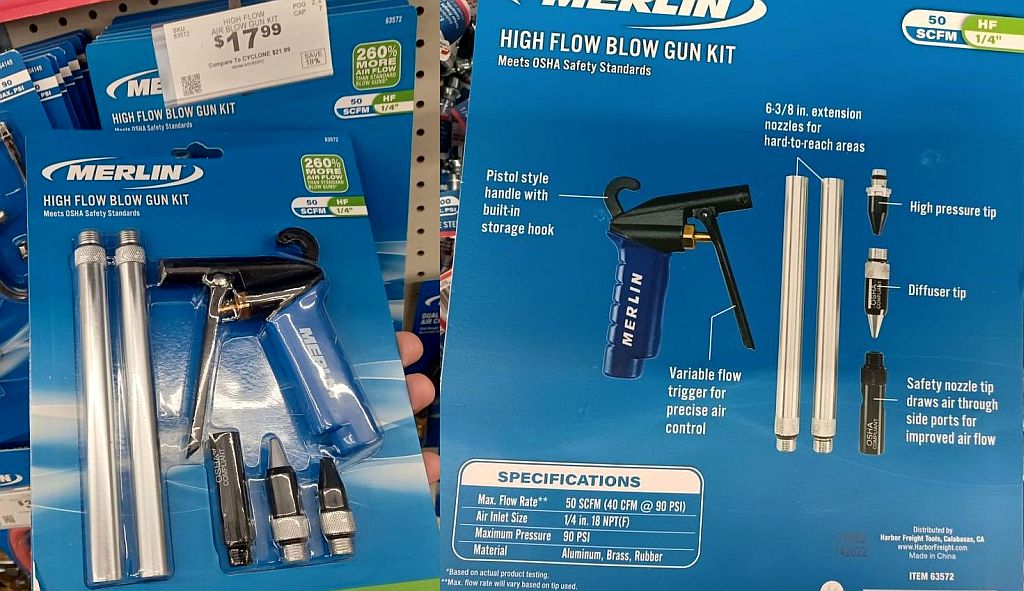
I found something! https://i.postimg.cc/T3c6sjss/soda01.jpg
It was in the automotive tools section of the air compressor section!
The hole in the tip is so small I can't even see it without glasses.
But the problem is the gun has to handle 800 psi & it says it's only 90psi.
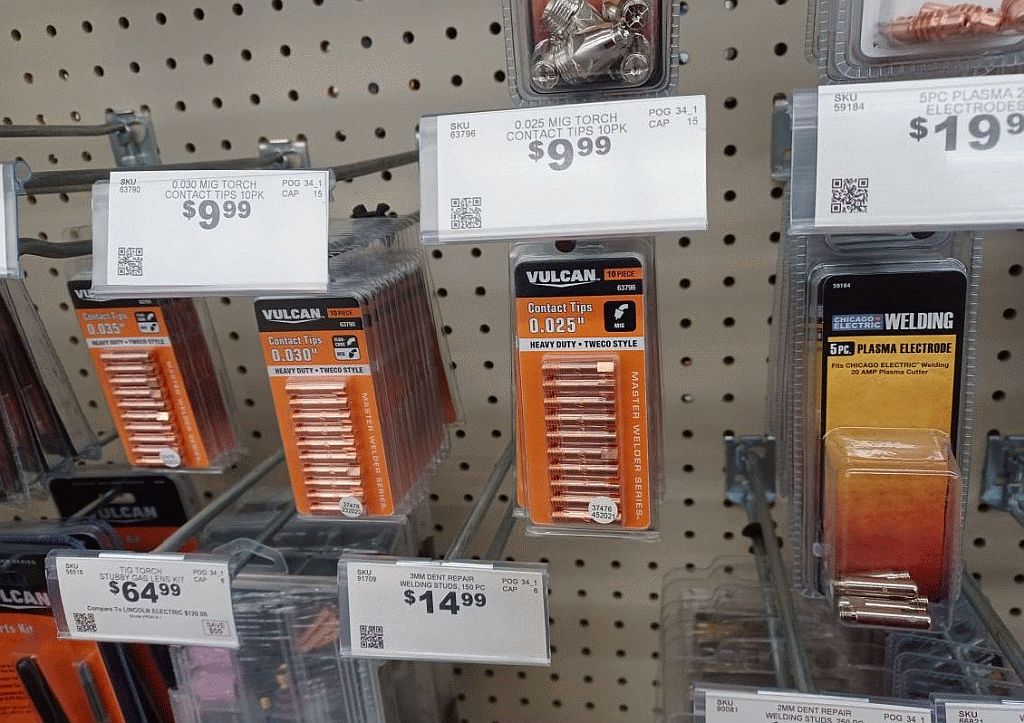
And I found an almost perfect teeny-tiny-airhole gun tip too!
It was in the welding section! https://i.postimg.cc/ydg270fs/soda02.jpg
What do you think about those threaded MIG Welding "contact tips", whatever they are, they seem to be in sizes of 0.023", 0.030", 0.035", 0.045" sizes.
Do you think copper threaded mig welding contact tips can handle 800 psi?
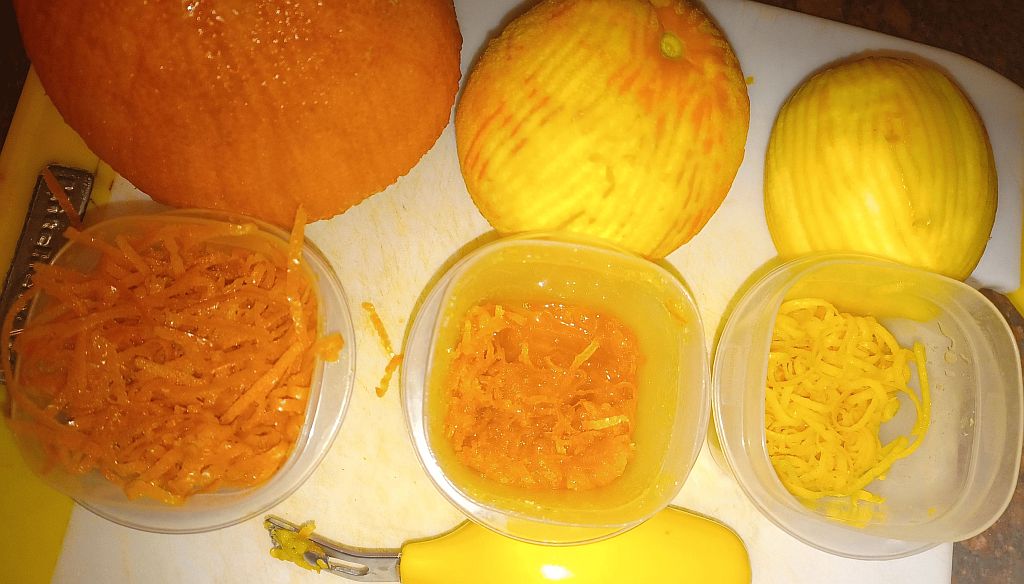
I even experimented with these three free citrus oil flavors. https://i.postimg.cc/7LsyHHwM/soda03.jpg
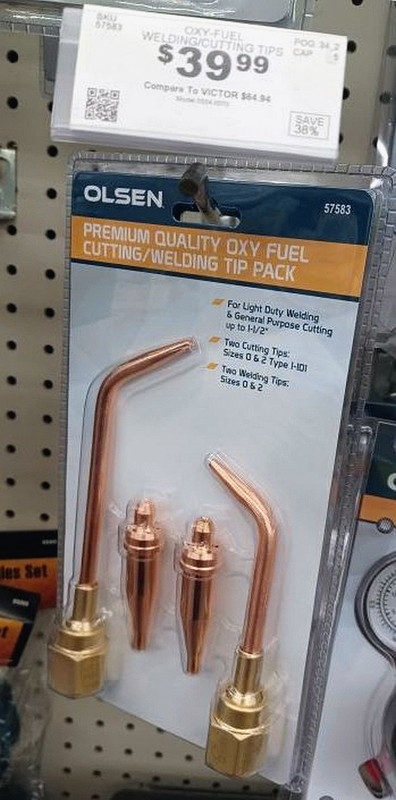
What I don't think will work are the oxyacetylene tips. https://i.postimg.cc/BZd4PnDm/soda04.jpg
What do you think about making an apparatus with the mig contact tips?
Try the nozzle at 90 psi with air into a bottle of water. I'd bet it
would blast water all over the place. Then imagine it at 800 PSI.
I am pretty sure that any of these nozzles, all designed for lower
pressures, have nozzles far to big for this use.
The 90 PSI hand gun would likely blow up at 800PSI.
Another thought - The sodastream system probably wastes 1/2 of the CO2
it uses by loss to the atmosphere, because it releases almost all the
CO2 that bubbles out of the water with each squirt into the
unpressurized bottle.
The way you do it with the carbonator cap on a
closed bottle wastes almost none.
A .5 micron stone at low pressure on
your bottle might be optimal, especially if you can come up with a restricting nozzle to limit the flow to an optimal bubble rate (or
slowly increase the pressure valve as the pressure in the bottle
increases and bubbles decrease)
Using the carbonator cap with the bottle, slowing increasing the
pressure, and shaking it too, to keep the bubbles from reaching the top
so fast might optimize what you have now.
On 2022-12-14 19:41:51 +0000, Bob F said:
Try the nozzle at 90 psi with air into a bottle of water. I'd bet it
would blast water all over the place. Then imagine it at 800 PSI.
I'm not going to disagree until I've tried it. When I get home from work I can try it out at home with just 120 psi from my air compressor.
The good thing is the automotive gun hole is so tiny I can barely see it.
The bad thing is the automotive gun is huge compared to what I need.
I am pretty sure that any of these nozzles, all designed for lower
pressures, have nozzles far to big for this use.
The smallest TIG welder hole opening I could find was 0.023", but it had
the advantage of being really tiny and already threaded. I'll stop by home depot on my way home from work to see if I can find what the threads are.
The 90 PSI hand gun would likely blow up at 800PSI.
I'm sure there is a good reason the gun says it is 90 psi, where even if we double that, it's far too low, and besides, the gaskets have to handle it.
Another thought - The sodastream system probably wastes 1/2 of the CO2
it uses by loss to the atmosphere, because it releases almost all the
CO2 that bubbles out of the water with each squirt into the
unpressurized bottle.
I think that might be true to a huge extent, but I think the bottle itself _is_ pressurized because it holds the pressure during storage in a frig.
It's not the bottle that isn't pressurized but the connection of the bottle to the sodastream that has an overpressure valve, I think.
I couldn't get out of sodastream what pressure they pressurize the bottles to, but they say the bottles "expire" after a few years.
The way you do it with the carbonator cap on a closed bottle wastes
almost none.
What I love about the carbonation cap idea, which I think it was you who brought it up first, is that it's so simple in threading it together.
1. I get a dozen of the carbonation caps, one for each bottle.
2. I get one of the Y-shaped fillers and I fill up each bottle.
3. At that point I can let it sit for days to slowly carbonate.
As you said, the carbon dioxide in the water will eventually equilibrate
with whatever partial pressure of CO2 is in the headspace, but I can always squeeze all that out and repressurize the headspace whenever I want to.
It seems to be the slowest method overall but if I do ten or twenty liters
at a time, it's actually the least amount of fuss. I would only have to refrigerate the bottle a day or two before using it so the frig can hold
only one bottle while the other nineteen can be on a pantry shelf like a
soda bottle sits in the shelves in the grocery store.
A .5 micron stone at low pressure on your bottle might be optimal,
especially if you can come up with a restricting nozzle to limit the
flow to an optimal bubble rate (or slowly increase the pressure valve
as the pressure in the bottle increases and bubbles decrease)
The carbonating stone idea is still in the cards, mainly because it's so simple and so cheap but the more I look at it, I have to add a check valve
of some sort so that the water doesn't flow back to destroy the regulator.
Using the carbonator cap with the bottle, slowing increasing the
pressure, and shaking it too, to keep the bubbles from reaching the
top so fast might optimize what you have now.
I didn't think of that, but the carbonating cap can come with a nozzle in addition to the soda bottle threads, so yes, two can be done at the same time.
1. I pressurize the head space
2. I add gas from the stone which sinks to the bottom.
Right now I'm going to go to home depot to see what male threads are on the end of the copper tip 0.23" tig welder contact tip, because all I need then is to attach that copper tip to a piece of female threaded pipe attached to the bottle cap.
Please keep the ideas coming as this is replicating a soda stream without having a sodastream to replicate.
Kalifornia's bottle recycling program is screwed. The state collects
the money...
but since there are so few recyclers now (in spite of legal
requirements, it's cheaper for supermarkets to pay the fine than to
establish recycling systems) most people just toss theirs into the
recycling bin.
Apparently containers with deposits, cardboard, concrete and asphalt are
the only things worth recycling. I see a guy with a tiny Toyota pickup loaded higher than the cab with flattened cardboard from behind the
shops across the street. A couple of years ago he said he made $25/load
and it's a 10-mile round trip to the recycler.
Some people are just bloody-minded and save up enough bottles/cans to
make a 10-mile round trip worth doing. It may be noted that I once
brought back over $135.00 worth of aluminum cans (pickup truck).
That being said, I'm glad hubby stopped drinking the stuff. Rots your
teeth and is a general nuisance no matter how you look at it.
The Real Bev <[email protected]> wrote:
Kalifornia's bottle recycling program is screwed. The state collects
the money...
I don't think that's correct.
I think the store keeps the entire CRV.
I think the only part the state gets is the sales tax on the CRV.
So, for example, let's say (for arguments sake) the store sells ten cases
of soda a day every day for a year - which is 24 sodas per case times ten >cases a day times 365 days in a year which is about $9 thousand dollars in >CRV if I rough it out in my head using approximations.
At roughly a 10% California sales tax approximation, that's about $900 in >sales tax on the CRV alone which California _does_ get to collect (and
which the poor hapless consumer _never_ gets back when they return the
bottle for their CRV).
California likely makes billions alone on just the tax on the CRV.
In California, you can only give them fifty cans/bottles at a time if you
ask them to COUNT them (and pay you the CRV by number), but if you give
them more than fifty bottles, then they have the option to just weigh them >and give you an "average price", which is some kind of funky calculation.
Bugsy <[email protected]SY> writes:
The Real Bev <[email protected]> wrote:
Kalifornia's bottle recycling program is screwed. The state collects
the money...
I don't think that's correct.
I think the store keeps the entire CRV.
I think the only part the state gets is the sales tax on the CRV.
So, for example, let's say (for arguments sake) the store sells ten cases >of soda a day every day for a year - which is 24 sodas per case times ten >cases a day times 365 days in a year which is about $9 thousand dollars in >CRV if I rough it out in my head using approximations.Using your numbers:
$ printf '%f\n' $(( 0.05 * 240.0 * 365.0 ))
4380.000000
Which works out to about 18 million in CRV from the 4,147 grocery stores in California:
$ printf '%f\n' $(( 0.05 * 240.0 * 365.0 * 4147.0 ))
18163860.000000
Somewhat more if you add in minimarts and gas stations. Assuming your
10 cases/day (which is actually quite low, I suspect).
The total sales tax on the CRV (the state portion is 7.25%) would be
$ printf '%f\n' $(( 0.05 * 240.0 * 365.0 * 4147.0 * 0.0725 ))
1316879.850000
This leaves out wholesale sales (e.g. to restaurants for resale), and
ten cases a day is likely quite low for grocery stores in most urban
areas. Especially in modern times where canned flavored carbonated
water is popular.
At roughly a 10% California sales tax approximation, that's about $900 in >sales tax on the CRV alone which California _does_ get to collect (and >which the poor hapless consumer _never_ gets back when they return the >bottle for their CRV).However, they obtain the benefits of the tax in terms of road improvements, public safety, et cetera, et alia.
California likely makes billions alone on just the tax on the CRV.As noted above, it's likely in the low millions.
In California, you can only give them fifty cans/bottles at a time if you >ask them to COUNT them (and pay you the CRV by number), but if you give >them more than fifty bottles, then they have the option to just weigh them >and give you an "average price", which is some kind of funky calculation.Or you can flatten the cans and take them to a metal recycling facility where you're paid by the pound, which is what I did before I gave up on canned beverages.
| Sysop: | Keyop |
|---|---|
| Location: | Huddersfield, West Yorkshire, UK |
| Users: | 764 |
| Nodes: | 16 (2 / 14) |
| Uptime: | 08:45:09 |
| Calls: | 12,752 |
| Calls today: | 6 |
| Files: | 15,355 |
| Messages: | 6,556,539 |