Louis Ohland wrote:
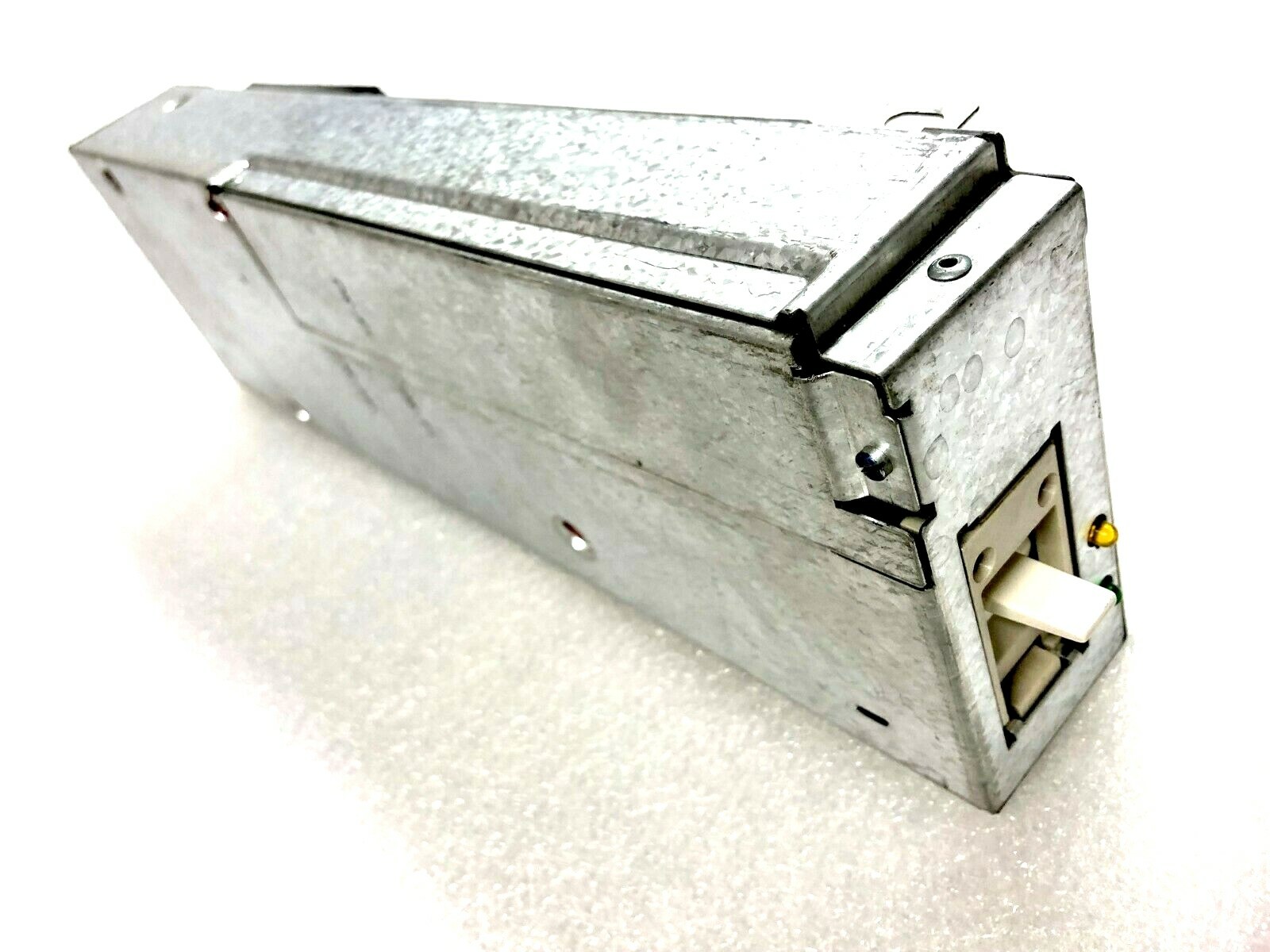
"There is a 9.25" (W) x 1.75" (H) hinged cover on the lower outer side
of the PSU. It is fastened at the front by a single captive standard
screw. The cover pivots open on the rear hinges, revealing a three pin
Molex power connector, like a female drive power connector. The battery cavity is 1.875" deep."
https://i.ebayimg.com/images/g/YiQAAOSwtbViM62W/s-l1600.jpg
So... you think a sealed lead acid battery of 12 cells will fit?
Please give me an example, that will most certainly help...
Sure, you can make a SLA battery pack into most any shape you want if
you're not opposed to creating a non-standard design point -- and IBM is
famous for "going their own way", especially in their earlier days. The
key here is that the battery pack needs to put out 180W of power for 10
or 11 seconds, then it gets recharged to be ready for the next power
dip. That's a poor usage case for NiCD, which suffers from the memory
effect if you don't discharge slowly and most of the way towards full discharge, but lead-acid can dump out power quickly and cycle often,
though doing that lowers the pack lifetime, it would probably need to be replaced every 3 years or so.
The sort of SLA battery that most people are familiar with today would
be a 1290 pack (12V, 9Ah) which is commonly used in UPS units and
electric scooters for the disabled/elderly. The dimensions on the 1290
are roughly 5 3/4" x 2 1/2" x 3 3/4", so that's not going to fit in the
PSU compartment, but it also has way more energy capacity than is needed
for this application (and you'd need two of them in series to get to
24V). A small 24V stack with 5% of the capacity of a 1290 could be made
as thin as 1 inch, though the thicker you make the plates the more
capacity you'll have available and the pack will last longer.
And IBM made custom SLA pack configurations on many "big iron" products,
like the mainframes and storage boxes. Those packs were huge, heavy and expensive, but of course they were designed to provide a lot more power
for a longer period of time so that the "big iron" could shut down
gracefully when the power went out. But even the smaller DS5020 storage
boxes had a small battery pack that could make sure that the write cache
was written to DASD when a power outage struck, though that pack used
lithium cells. In today's designs, lithium is going to beat lead-acid
at least 90% of the time. A lot of IBM's ServeRAID adapters also had a
lithium backup battery pack, and all of the crypto adapters had backup batteries -- all of which were custom IBM designs.
--- SoupGate-Win32 v1.05
* Origin: fsxNet Usenet Gateway (21:1/5)